bg‑azure

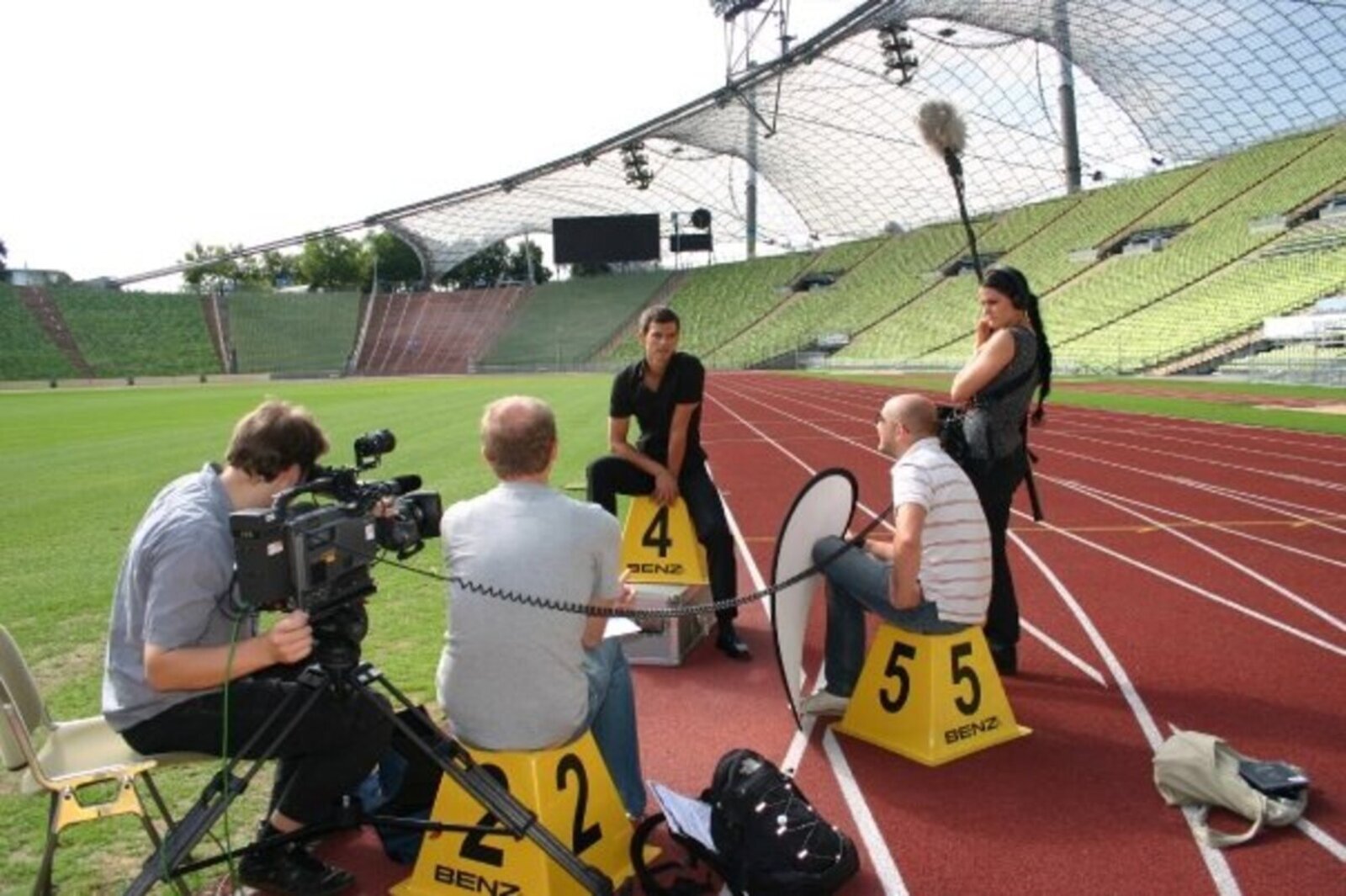
Many people love sports not only because they like to see competition, but also because they admire professional athletes. What motivates them to become their best selves? How much do they train? What are the difficulties they have to deal with? We often ask ourselves such questions and seek answers from those who know the answers. That’s why we appreciate interviews with sportsmen. In this section, you’re going to read a rundown of one such interview.

Wielu ludzi kocha sporty nie tylko dlatego, że lubią oglądać rywalizację, lecz także dlatego, że podziwiają profesjonalnych sportowców. Co ich motywuje do stania się najlepszą wersją samego siebie? Jak dużo trenują? Z jakimi trudnościami muszą sobie radzić? Często zadajemy sobie takie pytania i szukamy odpowiedzi od tych, którzy je zadają. Dlatego doceniamy wywiady ze sportowcami. W tej sekcji przeczytasz streszczenie takiej rozmowy.
RkelK56czxVwF
Are you interested in what athletes have to say?
Czy interesuje cię, co mają do powiedzenia sportowcy?
Źródło: dostępny w internecie: www.wikimedia.com [dostęp 23.08.2022], domena publiczna.
Exercise 1
R11fvbnVs0ibl
Match the words with their definitions. athletic Możliwe odpowiedzi: 1. having or showing the capacity to develop into something in the future, 2. be entitled to a particular benefit or privilege by fulfilling a necessary condition, 3. physically strong, fit, and active, 4. in a state of peaceful happiness, 5. ecstatically happy, 6. succeed in obtaining (something), especially with difficulty potential Możliwe odpowiedzi: 1. having or showing the capacity to develop into something in the future, 2. be entitled to a particular benefit or privilege by fulfilling a necessary condition, 3. physically strong, fit, and active, 4. in a state of peaceful happiness, 5. ecstatically happy, 6. succeed in obtaining (something), especially with difficulty qualify Możliwe odpowiedzi: 1. having or showing the capacity to develop into something in the future, 2. be entitled to a particular benefit or privilege by fulfilling a necessary condition, 3. physically strong, fit, and active, 4. in a state of peaceful happiness, 5. ecstatically happy, 6. succeed in obtaining (something), especially with difficulty content Możliwe odpowiedzi: 1. having or showing the capacity to develop into something in the future, 2. be entitled to a particular benefit or privilege by fulfilling a necessary condition, 3. physically strong, fit, and active, 4. in a state of peaceful happiness, 5. ecstatically happy, 6. succeed in obtaining (something), especially with difficulty secure Możliwe odpowiedzi: 1. having or showing the capacity to develop into something in the future, 2. be entitled to a particular benefit or privilege by fulfilling a necessary condition, 3. physically strong, fit, and active, 4. in a state of peaceful happiness, 5. ecstatically happy, 6. succeed in obtaining (something), especially with difficulty elated Możliwe odpowiedzi: 1. having or showing the capacity to develop into something in the future, 2. be entitled to a particular benefit or privilege by fulfilling a necessary condition, 3. physically strong, fit, and active, 4. in a state of peaceful happiness, 5. ecstatically happy, 6. succeed in obtaining (something), especially with difficulty
Źródło: GroMar Sp. z o.o., licencja: CC BY-SA 3.0.

Read the text about an interview with a sprinter and then, do the exercises.

The Life of an Athlete
Zuzanna Kościuk The Life of an Athlete

Those of you who follow me surelysurelysurely know that I’m trying to become a sports journalist. I’ve written about it so many times, but up until last week, I had no luck securingsecuring [secure]securingproper intervieweeproper intervieweeproper interviewee. Well, what do you know, I’ve finally made it! I interviewed John Smith, an up‑and‑comingup‑and‑comingup‑and‑coming Olympic sprinterOlympic sprinterOlympic sprinter, and I’m so excited to give you a rundowngive you a rundown [give somebody a rundown]give you a rundown of what we talked about!

Of course, I had to start by asking about his  motivationmotivationmotivation. To my great surprise, he said he had never planned to become an athlete. Many sportsmen dream of participating inparticipating in [participate in]participating in the Olympics from a young age, but not John. He was just a boy who happened to behappened to be [happen to be]happened to be genetically giftedgenetically giftedgenetically gifted. His father would always say that he was faster and more athleticathleticathletic than other children his age. That’s why he encouraged him to sign up for his school’s track and field teamtrack and field teamtrack and field team. John said that his coach had seen the potentialpotentialpotential from the very first training. With time he became so good that both his parents and school suggested he should take ontake ontake on professional training.

John was barely a teen when short‑distance runningshort‑distance runningshort‑distance running overtook his lifeovertook his life [overtake one’s life]overtook his life. At that point, he understood that being a professional athleteprofessional athleteprofessional athlete was his future. He said that it had always been a dream of his father to see his son at the Olympics and it had become John’s dream, too. It’s no wonder then that he felt elatedelatedelated when he finally qualifiedqualified [qualify]qualified!

Of course, the road to successthe road to successthe road to success wasn’t easy. I asked John if he had ever felt like giving up. He said that he’d been thinking about it a lot but that the markmarkmark of a true athlete was powering throughpowering through [power through]powering through hard times. Surprisingly, the hardest thing for him was the strict dietstrict dietstrict diet! Before taking on professional short‑distance running, he’d loved eating a true English breakfast. However, he said that he had given it up in favour of a heartyheartyhearty dinner the night before. This way, his body could  focus onfocus onfocus on running instead of digestingdigesting [digest]digesting!

Finally, I asked if he could see himself winning an Olympic medal. His answer warmed my heart. He said that he only wanted to win to make his father proud. Of course, it doesn’t mean that he wouldn’t feel proud of himself, but that wasn’t his main motivation. What’s more, John said that he’d be contentcontentcontent even if he didn’t win anything. That’s because he’s already succeededsucceeded [succeed]succeeded by qualifying in the first place.

I loved interviewing John and believe me when I say that there are more interesting things he told me. In fact, he might be one of the most extraordinary athletes I’ve ever met! If you want to learn about him, keep an eye outkeep an eye out (for something/somebody)keep an eye out for when I post the full interview!

1 Źródło: Zuzanna Kościuk, licencja: CC BY-SA 3.0.
Exercise 2
Rj5hzf3IGYIpk
Read the text and choose the correct answer. 1. You could find the above text
a) on a personal blog.
b) in a newspaper.
c) in a diary.
d) in a sports magazine.
2. John is an athlete who has
a) already taken part in the Olympics.
b) only began his journey as a sprinter.
c) won a few Olympic medals.
d) learned he’d take part in the Olympics.
3. When it comes to giving up, John
a) has thought about it.
b) has never considered it.
c) would never do it.
d) has already done it.
4. John suggests that his main motivation
a) has always been his father.
b) is becoming an Olympic medal winner.
c) is becoming the best sprinter in the world.
d) has never revolved around impressing anyone.
5. The author had pleasant feelings when they learned that
a) John wanted to win a medal for his father.
b) John had qualified for the Olympics.
c) their interview would be published in full.
d) they landed an interview with a famous person.
6. Overall, the author is
a) unhappy with what they learned.
b) bored by what the athlete told him.
c) impressed by the athlete.
d) content with not learning much.
Źródło: GroMar Sp. z o.o., licencja: CC BY-SA 3.0.
Exercise 3
R13LZSjIpKPYA
Pair the halves of the phrases from the text. keep Możliwe odpowiedzi: 1. to success, 2. on, 3. favour of, 4. in, 5. an eye out, 6. through, 7. to be in Możliwe odpowiedzi: 1. to success, 2. on, 3. favour of, 4. in, 5. an eye out, 6. through, 7. to be power Możliwe odpowiedzi: 1. to success, 2. on, 3. favour of, 4. in, 5. an eye out, 6. through, 7. to be focus Możliwe odpowiedzi: 1. to success, 2. on, 3. favour of, 4. in, 5. an eye out, 6. through, 7. to be participate Możliwe odpowiedzi: 1. to success, 2. on, 3. favour of, 4. in, 5. an eye out, 6. through, 7. to be happen Możliwe odpowiedzi: 1. to success, 2. on, 3. favour of, 4. in, 5. an eye out, 6. through, 7. to be the road Możliwe odpowiedzi: 1. to success, 2. on, 3. favour of, 4. in, 5. an eye out, 6. through, 7. to be
Źródło: GroMar Sp. z o.o., licencja: CC BY-SA 3.0.
Exercise 4
REnVN5Uc7WdjD
Drag and drop the phrases from the text to fill in the gaps in the sentences below. 1. My training tends to be draining, but I 1. focus on, 2. participate in, 3. power through, 4. in favour of, 5. happened to be, 6. the road to success, 7. keep an eye out to qualify for the Olympics!
2. If you’re interested in this athlete’s career, you’d better 1. focus on, 2. participate in, 3. power through, 4. in favour of, 5. happened to be, 6. the road to success, 7. keep an eye out for an upcoming interview with him.
3. She said that 1. focus on, 2. participate in, 3. power through, 4. in favour of, 5. happened to be, 6. the road to success, 7. keep an eye out had been long and bumpy, but totally worth it.
4. I would love to meet you tonight, but unfortunately I have to 1. focus on, 2. participate in, 3. power through, 4. in favour of, 5. happened to be, 6. the road to success, 7. keep an eye out my training.
5. He had never planned to become an athlete, he just 1. focus on, 2. participate in, 3. power through, 4. in favour of, 5. happened to be, 6. the road to success, 7. keep an eye out in the right place at the right time.
6. They are elated because they are going to 1. focus on, 2. participate in, 3. power through, 4. in favour of, 5. happened to be, 6. the road to success, 7. keep an eye out the upcoming tournament.
7. She said that she had stopped eating unhealthy food 1. focus on, 2. participate in, 3. power through, 4. in favour of, 5. happened to be, 6. the road to success, 7. keep an eye out healthier alternatives.
Źródło: GroMar Sp. z o.o., licencja: CC BY-SA 3.0.
Exercise 5

The interview with John touched upon the subject of motivation. What are the other things that can motivate athletes to become their best? Answer the question in 4‑5 sentences.

R2VULJ5IlSPU6
(Uzupełnij).
Źródło: GroMar Sp. z o.o., licencja: CC BY-SA 3.0.
GRAMATYKA

Reported SpeechMowa zależna

Mowy zależnej używamy, gdy chcemy przekazać treść czyjejś wypowiedzi bez jej cytowania.

Przykłady:

Jack said: “I am late”.Jack said (that)* he was late. - Jack powiedział: „Jestem spóźniony”. - Jack powiedział, że jest spóźniony

Tom said: “I will be a famous athlete one day.”Tom said (that) he would be a famous athlete one day. - Tom powiedział: „Pewnego dnia będę sławnym sportowcem”. - Tom powiedział, że pewnego dnia będzie sławnym sportowcem.

Anne said: “I’ve been training for 2 years.”Anne said (that) she had been training for 2 years. -Anne powiedziała: „Trenuję od 2 lat”. - Anne powiedziała, że trenuje od 2 lat.

*Wyraz that w nawiasie oznacza, że możemy go pominąć bez zmiany znaczenia zdania

Jak zapewne zauważyłeś/zauważyłaś, w powyższych zdaniach zmienił się czas. Nazywamy to następstwem czasów. Innymi słowy, mowa zależna polega na cofnięciu czasu użytego w zdaniu podrzędnym o jeden czas do tyłu.

Zestawienie zmiany czasów

Present Simple -> Past Simple

Przykłady:

Sue said: “I don’t like sports.”Sue said (that) she didn’t like sports. Sue powiedziała: „Nie lubię sportu”. - Sue powiedziała, że nie lubi sportu.

“I enjoy my training,” John said.John said (that) he enjoyed his training. - Lubię swoje treningi”, powiedział John. - John powiedział, że lubi swoje treningi.

Mary said: “I train with five other athletes.”Mary said (that) she trained with five other athletes. - Mary powiedziała: „Trenuję z pięcioma innymi sportowcami”. - Mary powiedziała, że trenuje z pięcioma innymi sportowcami.

Present Continuous -> Past Continuous

Przykłady:

Bob said: “I’m preparing for the tournament.”Bob said (that) he was preparing for the tournament. - Bob powiedział: „Przygotowuję się do turnieju”. - Bob powiedział, że przygotowuje się do turnieju.

Mary and Joe said: “We’re warming up right now.”Mary and Joe said (that) they were warming up at that moment/ then. - Mary i Joe powiedzieli: „Rozgrzewamy się w tej chwili.” - Mary i Joe powiedzieli, że rozgrzewają się w tej chwili.

I’m not competing against my teammates,” Sarah said.Sarah said (that) she wasn’t competing against her teammates. - Nie rywalizuję z koleżankami z drużyny”, powiedziała Sarah. - Sarah powiedziała, że nie rywalizuje z koleżankami z drużyny.

Past Simple -> Past Perfect

Przykłady:

“I asked my trainer about an endurance workout yesterday,” Nick said.Nick said (that) he had asked his trainer about an endurance workout that day/ the day before/ the previous day. - Zapytałem wczoraj mojego trenera o trening wytrzymałościowy”, powiedział Nick. - Nick powiedział, że zapytał swojego trenera o trening wytrzymałościowy tego dnia/przedwczoraj/poprzedniego dnia.

Hannah said: “I didn’t like doing cardio.”Hannah said (that) she hadn’t liked doing cardio. - Hannah powiedziała: „Nie lubiłam ćwiczyć cardio”. - Hannah powiedziała, że nie lubiła ćwiczyć cardio.

Jonas said: “Our team won the tournament.”Jonas said (that) his team had won a tournament. - Jonas powiedział: „Nasza drużyna wygrała turniej”. - Jonas powiedział, że jego drużyna wygrała turniej.

Past Continuous -> Past Perfect Continuous

Przykłady:

“I was doing cardio last week,” my brother said.My brother said (that) he had been doing cardio the previous week/the week before. - „Ćwiczyłem cardio w zeszłym tygodniu” - powiedział mój brat. - Mój brat powiedział, że ćwiczył cardio w poprzednim tygodniu/tydzień wcześniej.

Jane said: “I wasn’t working out yesterday.”Jane said (that) she hadn’t been working out the day before/ the previous day. - Jane powiedziała: „Nie ćwiczyłam wczoraj”. - Jane powiedziała, że nie ćwiczyła poprzedniego dnia.

Mrs. Jones said: “I was taking part in the tournament.”Mrs. Jones said (that) she had been taking part in the tournament. - Pani Jones powiedziała: „Brałam udział w turnieju”. - Pani Jones powiedziała, że brała udział w turnieju.

Present Perfect -> Past Perfect

Przykłady:

We’ve lost against the other team,” my team said.My team said (that) we had lost against the other team. - „Przegraliśmy z inną drużyną”, powiedział mój zespół. - Mój zespół powiedział, że przegraliśmy z inną drużyną.

Frances said: “I’ve never won a gold medal.”Frances said (that) she had never won a gold medal. - Frances powiedziała: „Nigdy nie zdobyłam złotego medalu”. - Frances powiedziała, że nigdy nie zdobyła złotego medalu.

James said: “She’s been a great asset to the team.”James said (that) she had been a great asset to the team. - James powiedział: „Była wielkim atutem zespołu”. - James powiedział, że była wielkim atutem zespołu.

Present Perfect Continuous -> Past Perfect Continuous

Przykłady:

Mr. Smith said: “We’ve been training for a year.”Mr. Smith said (that) we had been training for a year. - Pan Smith powiedział: „Trenujemy od roku”. - Pan Smith powiedział, że trenowaliśmy przez rok.

They’ve been exercising since January,” Helen said.Helen said (that) they had been exercising since January„Ćwiczą od stycznia” - powiedziała Helen. - Helen powiedziała, że ćwiczą od stycznia.

“I haven’t been exercising for two months,” my dad said.My dad said (that) he hadn’t been exercising for two months. - „Nie ćwiczyłem od dwóch miesięcy” - powiedział mój tata. - Mój tata powiedział, że nie ćwiczy od dwóch miesięcy.

Future Simple -> Future in the Past

Przykłady:

“I will train tomorrow,” Jack said.Jack said (that) he would train the next day/ the following day. - „Będę trenować jutro”, powiedział Jack. - Jack powiedział, że będzie trenował następnego dnia.

Tom said: “I won’t take part in the tournament.”Tom said (that) he wouldn’t take part in the tournament. - Tom powiedział: „Nie wezmę udziału w turnieju”. - Tom powiedział, że nie weźmie udziału w turnieju.

Nick said: “She will join our team’s training.”Nick said (that) she would join their team’s training. - Nick powiedział: „Ona dołączy do treningu naszej drużyny.” - Nick powiedział, że dołączy do treningu ich drużyny.

Future Continuous -> Future Continuous in the Past

Przykłady:

“I will be exercising tomorrow at 5,” Natasha said.Natasha said (that) she would be exercising at 5 the following day/ the next day. - „Będę ćwiczyć jutro o 5”, powiedziała Natasha. - Natasha powiedziała, że będzie ćwiczyć o 5 następnego dnia.

My mum said: “I will be watching your training.”My mum said (that) she would be watching my training. - Moja mama powiedziała: „Będę obserwować twój trening”. - Moja mama powiedziała, że będzie obserwować mój trening.

Thomas said: “I won’t be training next week.”Thomas said (that) he wouldn’t be training the following week/ the next week. - Thomas powiedział: „Nie będę trenował w przyszłym tygodniu”. - Thomas powiedział, że nie będzie trenował w następnym tygodniu.

Uwaga! Poza czasami wymienionymi powyżej zmianom ulegają też niektóre czasowniki modalne.

Przykłady:

Jack said: “I will talk to our trainer.”Jack said (that) he would talk to their trainer. - Jack powiedział: „Porozmawiam z naszym trenerem”. - Jack powiedział, że porozmawia z ich trenerem.

Paula said: “I can help you with the work out.”Paula said (that) she could help me with the work out. - Paula powiedziała: „Mogę ci pomóc z treningiem”. - Paula powiedziała, że może mi pomóc z treningiem.

“I may join your team,” Steve said to us.Steve said (that) he might join our team. - „Być może dołączę do waszego zespołu” - powiedział Steve. - Steve powiedział, że może dołączyć do naszego zespołu.

Uwaga! Pamiętaj, że czasów zaprzeszłych (Past Perfect) nie cofamy. Zostawiamy je bez zmian.

Przykłady:

Mary said: “Before the tournament, I had hoped to win.”Mary said (that) she had hoped to win before the tournament. Mary powiedziała: „Przed turniejem miałam nadzieję, że wygram”. - Mary powiedziała (że) miała nadzieję wygrać przed turniejem.

Tom said: “Before my holiday, I had been working out for days.”Tom said (that) he had been working out for days before his holiday. - Tom powiedział: „Przed wakacjami ćwiczyłem przez wiele dni”. - Tom powiedział, że ćwiczył przez wiele dni przed wakacjami.

Exercise 6
R8E4fARV7zybB
In each sentence, choose the correct tense. 1. Hanna said: “I exercise three times a week.”
Hannah said that she exercisedwas exercisinghad exercisedwould exercise three times a week.
2. Tom said: “I will be having a swimming session tomorrow at 3.”
Tom said that he would havewill havewould be havingwill be having a swimming session the next day at 3.
3. Jane said: “We haven’t won against the enemy team.”
Jane said that they hadn’t wonwouldn’t winhaven’t wondidn’t win against the enemy team.
4. Jack said: “I will see you tomorrow at the training.”
Jack said that he had seenwould seewill seewould be seeing me the next day at the training.
5. Mary said: “I was practising tennis the entire day.”
Mary said that she was practisinghad practisedpractisedhad been practising the entire day.
6. John said: “I saw you yesterday at the gym.”
John said that he sawhad seenwas seeinghad been seeing me the previous day at the gym.
7. Jerry said: “I’m watching the game right now.”
Jerry said that he is watchingwatchedwas watchinghad been watching the game then.
8. My parents said: “We’ve been hiking for hours now.”
My parents said that they have been hikinghad been hikinghave hikedhiked for hours at that point.
Źródło: GroMar Sp. z o.o., licencja: CC BY-SA 3.0.
GRAMATYKA

Zauważ że, w mowie zależnej oprócz czasu zmieniają się też następujące części zdania.

Zaimki

Przykład:

Theresa said: “I’m joining my sister’s team.”Theresa said (that) she was joining her sister’s team. - Theresa powiedziała: „Dołączam do drużyny mojej siostry”. - Theresa powiedziała, że dołącza do drużyny swojej siostry.

Zaimki wskazujące

Mr. Smith said: “This athlete is a professional.”Mr. Smith said (that) that athlete was a professional. - Pan Smith powiedział: „Ten zawodnik jest profesjonalistą”. - Pan Smith powiedział, że ten zawodnik jest profesjonalistą.

Pete said: “These teams are really good.”Pete said (that) those teams were really good. - Pete powiedział: „Te drużyny są naprawdę dobre”. - Pete powiedział, że te drużyny są naprawdę dobre.

Określenia czasu

Sue said: “I’m exhausted after today’s training.”Sue said (that) she was exhausted after that day’s training. - Sue powiedziała: „Jestem wyczerpana po dzisiejszym treningu”. - Sue powiedziała, że jest wyczerpana po dzisiejszym treningu.

Nick said: “I was very busy yesterday.”Nick said (that) he was very busy the day before/ the previous day. - Nick powiedział: „Byłem wczoraj bardzo zajęty”. - Nick powiedział, że był bardzo zajęty poprzedniego dnia.

Mary said: “I’m working out right now.”Mary said (that) she was working out right then. - Mary powiedziała: „Właśnie teraz ćwiczę”. - Mary powiedziała, że właśnie ćwiczy.

Inne określenia czasu

at the moment -> at the time - w tej chwili -> w tym czasie

this month -> that month - w tym miesiącu -> w tamtym miesiącu

last week -> the previous week/ the week before - w zeszłym tygodniu -> w poprzednim tygodniu / tydzień wcześniej

next month -> the next month/ the following month - w następnym miesiącu -> w nadchodzącym miesiącu/ w kolejnym miesiącu

*tomorrow -> the next day/ the following day - *jutro -> następnego dnia/ kolejnego dnia

the day after tomorrow -> two days later - pojutrze -> dwa dni później

2 years ago -> 2 years before2 lata temu -> 2 lata wcześniej

Dlaczego w mowie zależnej następują takie zmiany? Wyobraź sobie, że rozmawiasz z kimś w poniedziałek i słyszysz: I’m training today. - Trenuję dzisiaj - Jeśli odnosisz się do tej wypowiedzi po kilku dniach, możliwe, że twój rozmówca nie odbywa już treningu, więc użycie wyrazu today nie ma sensu.

Określenia miejsca

Paul said: “We’re always training here.”Paul said (that) they were always training there. - Paul powiedział: „Zawsze trenujemy tutaj”. - Paul powiedział, że zawsze tam trenowali.

Dlaczego w mowie zależnej następują te zmiany? Wyobraź sobie, że rozmawiasz z koleżanką w szkole. Jeśli odnosisz się do tej wypowiedzi po kilku dniach, możliwe, że jesteś w innym miejscu, więc użycie wyrazu here będzie odnosiło się do innego miejsca niż tego, w którym właśnie jesteś.

Exercise 7
R15eKcvcxJKHg
Transform the underlined words and phrases to create reported speech. Transform the underlined words and phrases to create reported speech. 1. My sister said: “This person has been working out for 3 hours now.” My sister said Tu uzupełnij person has been working out for 3 hours then. 2. Tom said: “I’ve never seen you training here.” Tom said that he had never seen me training Tu uzupełnij. 3. Nick said: “I went to your match last week.” Nick said that he had gone to my match Tu uzupełnij. 4. Sally said: “I’m seeing my coach right now.” Sally said that she was seeing her coach Tu uzupełnij. 5. Mike said: “ I will see my sister soon.” Mike said that Tu uzupełnij would see Tu uzupełnij sister soon. 6. They said: “ You will be joining our team.” They said that Tu uzupełnij would be joining Tu uzupełnij team. 7. My brother said: “ These people can’t play football at all.” My brother said that Tu uzupełnij people couldn’t play football at all.
Źródło: GroMar Sp. z o.o., licencja: CC BY-SA 3.0.
Exercise 8
R1H6lZW8XhTdx
1. They said: “Our team has been training for weeks.” Tu uzupełnij 2. He said: “I’ve never seen you here before.” Tu uzupełnij 3. My grandma said: “You will be visiting us next week.” Tu uzupełnij 4. Ben said: “I was training the entire morning.” Tu uzupełnij 5. Kelly said: “I saw you at the training a month ago.” Tu uzupełnij 6. John said: “These players have been warming up for an hour.” Tu uzupełnij 7. Chris said: “Before the match, I had wished to see you.” Tu uzupełnij
Źródło: GroMar Sp. z o.o., licencja: CC BY-SA 3.0.
GRAMATYKA

W mowie zależnej pytania tworzy się inaczej niż w większości przypadków. Przede wszystkim należy pamiętać, że zachowują one szyk zdania oznajmującego.

Yes/no questionspytania ogólne

W przypadku yes/no questions należy użyć spójnika if lub whether. Oba z nich oznaczają polskie „czy”, ale whether jest bardziej formalne.

Przykłady:

“Will you be at the training tomorrow?” Mike asked. – Mike asked me if I would be at the training the following day/ the next day. - „Będziesz jutro na treningu?” zapytał Mike. - Mike zapytał mnie, czy będę na treningu następnego dnia.

“Do you like sports?” Tom asked.Tom asked whether I liked sports. - „Lubisz sport?” zapytał Tom. - Tom zapytał, czy lubię sport.

My mum asked: “Did you attend the training last week?” – My mum asked if I had attended the training the week before. - Moja mama zapytała: „Czy byłeś na szkoleniu w zeszłym tygodniu?”. - Moja mama zapytała, czy uczestniczyłem w szkoleniu tydzień wcześniej.

Wh- questions pytania szczegółowe

Jeśli w pytaniu zaczynającym się od wyrazu lub wyrażenia pytającego pojawia się zaimek zaczynający się na wh-, musi też pojawić się on w pytaniu w mowie zależnej.

Przykłady:

What is your team’s name?” they asked me.They asked me what my team’s name was. - „Jak nazywa się twoja drużyna?” - zapytali mnie. - Zapytali mnie, jak nazywa się moja drużyna.

Mr. Smith asked: “Where will you train tomorrow?”Mr. Smith asked me where I would train the next day/ the following day. - Pan Smith zapytał: „Gdzie będziesz trenować jutro?”. - Pan Smith zapytał mnie, gdzie będę trenować następnego dnia.

Tom asked: “When is the tournament?”Tom asked when the tournament was. - Tom zapytał: „Kiedy jest turniej?”. - Tom zapytał, kiedy jest turniej.

We wszystkich powyższych przykładach użyto zwrotu to ask („pytać”) do zrelacjonowania pytania. Możemy też zastosować zwrot to inquire/enquire („pytać się”, „dowiadywać się”) lub to want to know („chcieć wiedzieć”).

Przykład:

Tom asked: “When is the tournament?” - Tom zapytał: „Kiedy jest turniej?”.

Tom asked when the tournament was. - Tom zapytał, kiedy jest turniej.

Tom inquired/enquired when the tournament was. - Tom zapytał, kiedy jest turniej.

Tom wanted to know when the tournament was. - Tom chciał wiedzieć, kiedy jest turniej.

Exercise 9
R131r0XEZqDUZ
Finish the questions. 1. “Will you join us for training?” Nick asked. Nick inquired Tu uzupełnij. 2. “Where was she during warm-up?” Tom asked. Tom asked Tu uzupełnij. 3. “When will you be joining my team?” Jenny asked. Jenny wanted to know Tu uzupełnij. 4. “Do you like tennis?” Mike asked. Mike asked Tu uzupełnij. 5. “What is she doing?” Brian asked. Brian asked Tu uzupełnij.
Źródło: GroMar Sp. z o.o., licencja: CC BY-SA 3.0.

Słownik

athletic
athletic

/ æthetaˈletɪk /

RDbc0TVXaYfmg1
Nagranie dźwiękowe

wysportowany/wysportowana

R1LPzfeyq645P1
Nagranie dźwiękowe
be in favour of
be in favour of

/  bi ɪn ˈfeɪvər ɒv /

R9xVjEkEFHp511
Nagranie dźwiękowe

być za, być zwolennikiem/zwolenniczką

R1dVCYZSKUR7d1
Nagranie dźwiękowe
content
content

/ kənˈtent /

R1nGuL9PZzIpj1
Nagranie dźwiękowe

tu: zadowolony/zadowolona

RVAqZ3dD0mV1k1
Nagranie dźwiękowe
digesting [digest]
digesting [digest]

/ dai'dʒestɪŋ / / daɪˈdʒest /

RQMv6XREQlbmU1
Nagranie dźwiękowe

trawieniu [trawić]

RGbudasW16BMS1
Nagranie dźwiękowe
elated
elated

/ ɪˈleɪtɪd /

RjCORMkKpkgZK1
Nagranie dźwiękowe

uszczęśliwiony/uszczęśliwiona

R1FXxuItHqn3w1
Nagranie dźwiękowe
focus on
focus on

/ ˈfəʊkəs ɒn /

RNDvdlKbMlJB61
Nagranie dźwiękowe

skupić się na

R1dTYTTEKcaTW1
Nagranie dźwiękowe
genetically gifted
genetically gifted

/ dʒɪˈnetɪkl̩i ˈɡɪftɪd /

RrHag8Rlgqt2L1
Nagranie dźwiękowe

genetycznie utalentowany/utalentowana (being good at something due to one’s genes)

R15NQqWgZaRgZ1
Nagranie dźwiękowe
give you a rundown [give somebody a rundown]

/ ɡɪv ju ə ˈrʌndaʊn / / ɡɪv ˈsʌmbədi ə ˈrʌndaʊn /

RYc1nWyezWEkB1
Nagranie dźwiękowe

opowiedzieć ci w skrócie o [opowiedzieć komuś w skrócie]

R1NbMOrr0JSSS1
Nagranie dźwiękowe
happened to be [happen to be]

/ ˈhæpənd tu bi / / ˈhæpən tu bi /

RRamgQqn5rcDG1
Nagranie dźwiękowe

tak się złożyło, że byłem/byłam [tak się składa, że jestem]

RSw2wGXBBomyo1
Nagranie dźwiękowe
hearty
hearty

/ ˈhɑːti /

R14Ytbfs1IM891
Nagranie dźwiękowe

obfity/obfita

RoetgH4cJNz9n1
Nagranie dźwiękowe
keep an eye out (for something/somebody)

/ kiːp ən eɪ ˈaʊt / / fə ˈsʌmthetaɪŋ ˈsʌmbədi /

Rfysd9H4PoaQ61
Nagranie dźwiękowe

wypatrywać czegoś, kogoś

RwinmNET7atXg1
Nagranie dźwiękowe
mark
mark

/ mɑːk /

RleZeftu41CNO1
Nagranie dźwiękowe

znak

R17qfviVZJoD61
Nagranie dźwiękowe
motivation
motivation

/ ˌməʊtɪˈveɪʃn̩ /

R1RGBoef1AsgD1
Nagranie dźwiękowe

motywacja

RgIkVyN9nCEom1
Nagranie dźwiękowe
Olympic sprinter
Olympic sprinter

/ əˈlɪmpɪk ˈsprɪntə /

R16brlOL5ycNm1
Nagranie dźwiękowe

krótkodystansowiec olimpijski (a person who runs, swims, etc. very fast over a short distance in a race)

RiaT01fJfpDiT1
Nagranie dźwiękowe
overtook his life [overtake one’s life]

/ ˌəʊvəˈtʊk hɪz life / / ˌəʊvəˈteɪk wʌnz life /

R15haQ4lWvN9O1
Nagranie dźwiękowe

zawładnęło jego życiem [zawładnąć czyimś życiem]

R1TT6gpAnUOzt1
Nagranie dźwiękowe
participating in [participate in]

/ pɑːˈtɪsɪpeɪtɪŋ ɪn / / pɑːˈtɪsɪpeɪt ɪn /

Re86iHUsuqRbt1
Nagranie dźwiękowe

branie udziału w [brać udział w]

R1AGi0RE30J971
Nagranie dźwiękowe
potential
potential

/ pəˈtenʃl̩ /

RawibnUv6YRwN1
Nagranie dźwiękowe

potencjał (having or showing the capacity to develop into something in the future)

RPM21F4q9xNhU1
Nagranie dźwiękowe
powering through [power through]

/ ˈpaʊərɪŋ thetaruː / / paʊə thetaruː /

R1dDMZSAud8yG1
Nagranie dźwiękowe

ukończenie czegoś pomimo trudności [ukończyć coś pomimo trudności]

RTOkXGVK4n4xt1
Nagranie dźwiękowe
professional athlete

/ prəˈfeʃnəl ˈæthetaliːt /

RDEIG8i3GOH0p1
Nagranie dźwiękowe

profesjonalny sportowiec

RJee12u3lAWdS1
Nagranie dźwiękowe
proper interviewee
proper interviewee

/ ˈprɒpər ˌɪntəvjuːˈiː /

R1OsUICZPqlVj1
Nagranie dźwiękowe

odpowiednia osoba udzielająca wywiadu

RuDr52rcmRpnc1
Nagranie dźwiękowe
qualified [qualify]
qualified [qualify]

/ ˈkwɒlɪfaɪd / / ˈkwɒlɪfaɪ /

R1ZKm8ICDetzh1
Nagranie dźwiękowe

zakwalifikować się [kwalifikować się]

RGCp98aLOJIJi1
Nagranie dźwiękowe
securing [secure]
securing [secure]

/ sɪˈkjʊərɪŋ / / sɪˈkjʊə /

ROtGdfAHUoTGu1
Nagranie dźwiękowe

uzyskiwanie [uzyskiwać], zapewnianie [zapewniać]

ROsXVZVFe7vIh1
Nagranie dźwiękowe
short‑distance running

/ ʃɔ:t ˈdɪstəns ˈrʌnɪŋ /

Rvryq7Q66PAXe1
Nagranie dźwiękowe

bieganie krótkodystansowe (short‑distance running is represented by races at distances no more than 400 metres)

Rft6OrtXzQyvH1
Nagranie dźwiękowe
strict diet
strict diet

/ strɪkt ˈdaɪət /

RMvf0KpFmTVUk1
Nagranie dźwiękowe

ścisła dieta

RPfYPdLSl433E1
Nagranie dźwiękowe
succeeded [succeed]
succeeded [succeed]

/ səkˈsiːdɪd / / səkˈsiːd /

ROSnqMNWcIERv1
Nagranie dźwiękowe

osiągnął/osiągnęła sukces [osiągnąć sukces]

RIymVDLOLVLRz1
Nagranie dźwiękowe
surely
surely

/ ˈʃʊəli /

Rm3mGN4dDwirq1
Nagranie dźwiękowe

z pewnością, na pewno

R59OqL5MKlnA91
Nagranie dźwiękowe
take on
take on

/ ˈteɪk ɒn /

RmrUJiHqmxPCF1
Nagranie dźwiękowe

godzić się na

REjZCoWMzDY8z1
Nagranie dźwiękowe
the road to success
the road to success

/ ðə rəʊd tu səkˈses /

RXz1niDmX6qMm1
Nagranie dźwiękowe

droga do sukcesu

R14k0AvI8nqkl1
Nagranie dźwiękowe
track and field team

/ træk ənd fi:ld tiːm /

R7myYt5V0DHOe1
Nagranie dźwiękowe

drużyna lekkoatletyczna (a team which engages in various competitive athletic events such as running, jumping, and weight throwing performed on a running track and on the adjacent field)

RoBsZuDGijpiu1
Nagranie dźwiękowe
up‑and‑coming
up‑and‑coming

/ ˌʌp ən ˈkʌmɪŋ /

R10kL0JgVTvp61
Nagranie dźwiękowe

dobrze zapowiadający/zapowiadająca się

RBQKyaiTBVzLC1
Nagranie dźwiękowe

Źródło: GroMar Sp. z o.o., licencja: CC BY‑SA 3.0

Ru1PIP2iPpPO6
(Uzupełnij).
Źródło: GroMar Sp. z o.o., licencja: CC BY-SA 3.0.
keep an eye out (for something/somebody)

/ kiːp ən eɪ ˈaʊt / / fə ˈsʌmthetaɪŋ ˈsʌmbədi /

Rfysd9H4PoaQ61
Nagranie dźwiękowe

wypatrywać czegoś, kogoś

RwinmNET7atXg1
Nagranie dźwiękowe