Przeczytaj
The United Kingdom, Great Britain and England are three different things. It’s very easy to get lost in small, cultural and national differences. In this section you are going to learn more about the ethnic and national aspects of the UK. You will also learn about the relation between the country’s history and the people who live there now.
Zjednoczone Królestwo, Wielka Brytania i Anglia – te nazwy mają nieco inne znaczenie. Łatwo więc pogubić się w niewielkich, narodowych różnicach. W tej sekcji nauczysz się o etnicznych i kulturowych elementach Zjednoczonego Królestwa. Dowiesz się też, jaki jest związek między historią Królestwa, a ludźmi, którzy obecnie tam żyją.
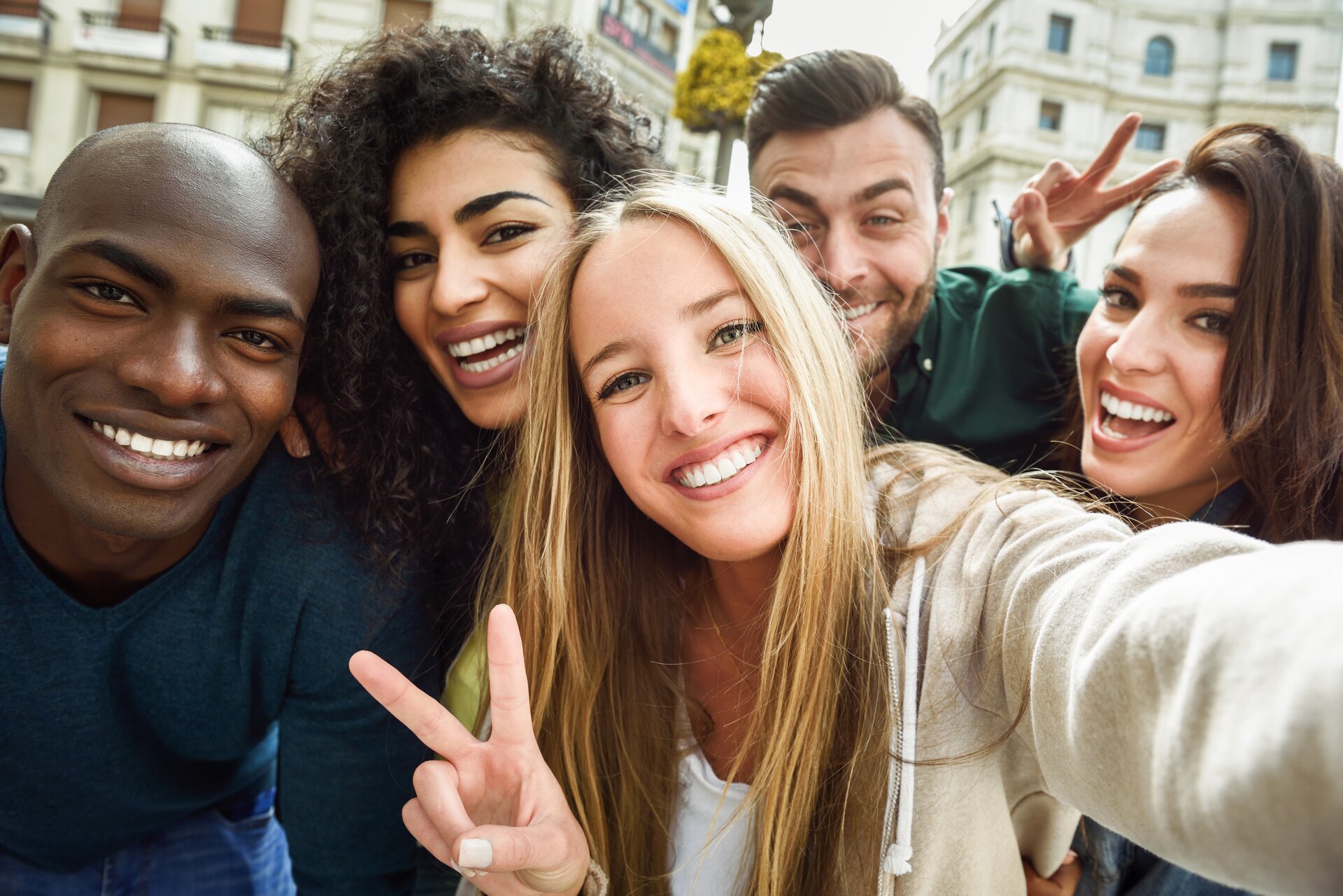
You’re from the UK? Where Exactly?The United Kingdom (UK) is a very multiculturalmulticultural country. This means that people living there can be vastly differentvastly different from each other. For a start, they can come from four different nations - England, Wales, Scotland and Northern Ireland. So if a person is BritishBritish, that doesn’t mean they are EnglishEnglish. They could be ScottishScottish, WelshWelsh or IrishIrish. It all depends on their place of birthplace of birth.
But even if you know a British person’s nationalitynationality, that doesn’t mean you can assumeassume their ethnicityethnicity. For example, Liverpool is an English city, but has an old Black communitycommunity because of its role in slave tradeslave trade in the 18th century, during colonialism. It also has the oldest EuropeanEuropean Chinese community. It has its originsorigins in the city’s trade with Shanghai dating back to the 1890s.
Other places in the UK are home tohome to many other ethnicethnic minoritiesminorities, too! This is because Great Britain was once a colonial empirecolonial empire and many people from its formerformer coloniescolonies come to big cities in the UK to look for work and new life opportunitiesopportunities.
If you live in Poland, it’s sometimes hard to imagine that a country can be so diversediverse. Yet the United Kingdom proves that many different kinds of people can live and build a future together. It is also proof that the question “Where are you from?” sometimes needs a follow‑upfollow‑up one: “Where exactly?”
Źródło: Konrad Gniazdowski, licencja: CC BY-SA 3.0.
Read the text and choose the correct answer.
The Irish, Scottish and 3.4 1. former, 2. nationality, 3. Welsh, 4. assume, 5. Irish, 6. English, 7. future, 8. home to, 9. ethnic, 10. multicultural, 11. follow-up people may get offended if you call them English. They feel they have a separate 3.5 1. former, 2. nationality, 3. Welsh, 4. assume, 5. Irish, 6. English, 7. future, 8. home to, 9. ethnic, 10. multicultural, 11. follow-up.
Apart from the four main national groups,
Great Britain is 3.6 1. former, 2. nationality, 3. Welsh, 4. assume, 5. Irish, 6. English, 7. future, 8. home to, 9. ethnic, 10. multicultural, 11. follow-up many 3.7 1. former, 2. nationality, 3. Welsh, 4. assume, 5. Irish, 6. English, 7. future, 8. home to, 9. ethnic, 10. multicultural, 11. follow-up minorities. Some of them live in Britain as a result of the country’s trade history, some of them come from its 3.8 1. former, 2. nationality, 3. Welsh, 4. assume, 5. Irish, 6. English, 7. future, 8. home to, 9. ethnic, 10. multicultural, 11. follow-up colonies. Although the country is diverse, its people try to build a 3.9 1. former, 2. nationality, 3. Welsh, 4. assume, 5. Irish, 6. English, 7. future, 8. home to, 9. ethnic, 10. multicultural, 11. follow-up together.
Drag and drop the elements below to make two‑sentence mini‑dialogues. In each of the points, start with a positive statement and then ask for clarification. There will be two options that you do not need.
Słownik
/ əˈsjuːm /
zakładać, przypuszczać
/ ˈbrɪtɪʃ /
brytyjski, Brytyjczyk/Brytyjka
/ kəˈləʊnɪəl ˈempaɪə /
imperium kolonialne
/ ˈkɒlənɪz / / ˈkɒləni /
kolonie [kolonia]
/ kəˈmjuːnɪti /
społeczność
/ daɪˈvɜːs /
różnorodny/różnorodna
/ ˈɪŋɡlɪʃ /
angielski, Anglik/Angielka
/ ˈethetanɪk /
etniczny/etniczna
/ ethetaˈnɪsəti /
pochodzenie etniczne
/ ˌjʊərəˈpɪən /
europejski, Europejczyk, Europejka
/ ˈfɒləʊ ʌp /
towarzyszący/towarzysząca, następujący/następująca po czymś
/ ˈfɔːmə /
były/była, niegdysiejszy/niegdysiejsza
/ həʊm tuː /
będący/będąca domem dla
/ ˈaɪrɪʃ /
irlandzki, Irlandczyk/Irlandka
/ ˈlɪvɪŋ pruːf /
żywy dowód
/ maɪˈnɒrɪtɪz / / maɪˈnɒrɪti /
mniejszości [mniejszość]
/ ˌmʌltiˈkʌltʃr̩əl /
wielokulturowy/wielokulturowa
/ ˌnæʃəˈnælɪti /
narodowość
/ ˈneɪʃn̩z / / ˈneɪʃn̩ /
narody [naród]
/ ˌɒpəˈtjuːnɪtɪz / / ˌɒpəˈtjuːnɪti /
szanse, okazje [szansa, okazja]
/ ˈɒrɪdʒɪnz /
źródła [źródło]
/ pleɪs əv bɜːtheta /
miejsce urodzenia
/ ˈskɒtɪʃ /
szkocki, Szkot/Szkotka
/ sleɪv ˈtreɪd /
handel niewolnikami
/ ˈvɑːstli ˈdɪfrənt /
diametralnie różny/różna
/ welʃ /
walijski, Walijczyk/Walijka
Źródło: GroMar Sp. z o.o.,licencja: CC BY‑SA 3.0