Przeczytaj
The picture below shows a young man working late in the office. He seems to be tired and disheartened. Have you ever experienced being totally overwhelmed with your home or school duties? In this section, you are going to read the text about three people at different stages of their careers. You will find out how each of them dealt with work related stress, prioritising their life and what made them happier.
Poniższe zdjęcie przedstawia młodego mężczyznę pracującego do późna w biurze. Wygląda on na zmęczonego i zniechęconego. Czy kiedykolwiek doświadczyłeś/doświadczyłaś uczucia całkowitego przytłoczenia obowiązkami domowymi lub szkolnymi? W tej sekcji przeczytasz tekst o trzech osobach na różnych etapach kariery zawodowej. Dowiesz się, w jaki sposób każda z nich radziła sobie ze stresem związanym z pracą i ustalała priorytety w życiu oraz co sprawiało, że była szczęśliwsza.

Look at the graph and answer the questions below with “YES” or “NO”.
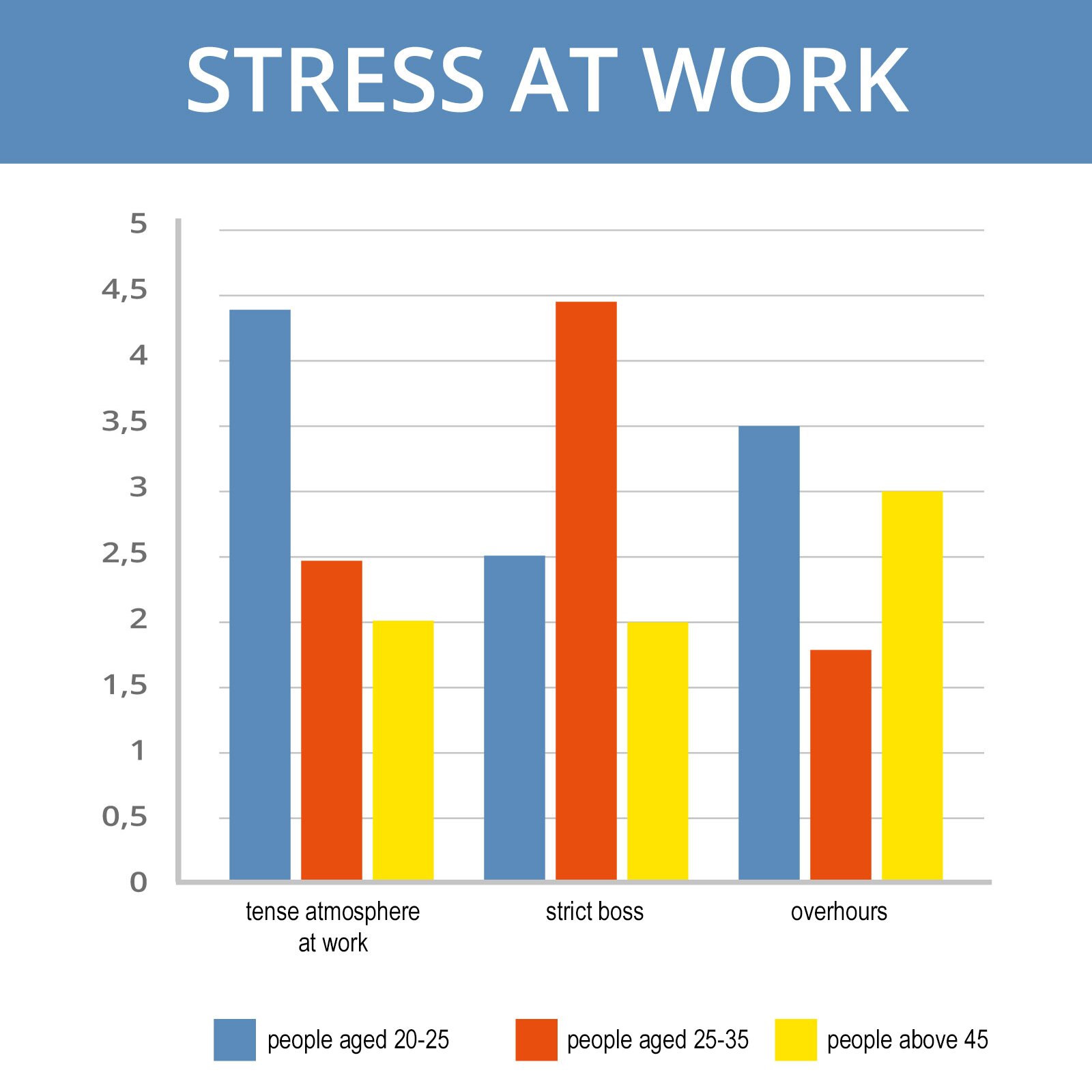
Read the text below about three people sharing their life and work experience and then, do the exercises.
Trying to Live BetterTyra, aged 36
My story? Well, to tell you the truth, I used to be a workaholic. My job was my prioritypriority. I would never choose to go to a family meeting if I didn’t finish a project or submitsubmit a report. Sometimes I even gave up on celebrations as important as my mother’s birthdays, not to mention countless Sunday family dinners. I strongly believed that my siblings and parents would forgive my frequent absence. After all, should they truly require my presence, we could always meet some other time. Except, this “other time” never happened because I was always busy and I exerted pressureexerted pressure on myself without any rational reason. I was always on time, ready to act, aid my team workers, and answer any work‑related querieswork‑related queries whether I was on the clock or not, which I now realise sounds unhealthy. My reports were always impeccableimpeccable, too accurate but conciseconcise and if there was a speck of misunderstanding, I fixed it at once. I thought that I was perfectly contentcontent and fulfilled as the job rewarded all my efforts… until that call. One day, my sister rang and informed me that our father had had a stroke. For the first time in my career, I took a day offtook a day off and, surprisingly, felt no remorseremorse. While I was dashingdashing to the hospital, I started to ponderponder on my life, which suddenly seemed devoid ofdevoid of everything truly important due to my misplaced prioritiesmisplaced priorities. I desperately wished I had spent more time with my dad. I reprimanded myself over and over for giving my parents lower prioritylower priority than my job and I promised myself to change it. The very next day, when my father woke up, I called my office and, to their astonishment, I took a week off. I had eventually realised I needed time to unwindtime to unwind and devote myself to my family.
Uhtred, aged 27
I couldn’t bear the pressure and ongoing assessmentassessment in my company. There was a sign on my boss’s door: “You should have done it yesterday” as meeting deadlinesmeeting deadlines were more than mandatorymandatory. Each of the employees’ desks had a slogan written on it, such as “Make your job a priorityMake your job a priority” or, to my horror: “A 40‑hour work week40‑hour work week is for weaklingsweaklings, be a strongman”. Nothing was more crucial than sales figures, customer satisfaction, and being available at any time of day or night. Nobody took unforeseen circumstancescircumstances under consideration, even if you had serious health or family‑related issues, which, as everybody knows, occuroccur more often than we'd like to think. In short, you were obliged to do your job on time no matter what and at the cost of your personal life. After two years of working in such a toxic atmosphere and with those, frankly insaneinsane, requirements, I was literally exhausted. The job I sacrificed myself for was a tremendous source of stresssource of stress in my life and it was the time when my body and mind started to rebel. Well, it couldn’t have ended any other way: I experienced severe burnoutburnout. One day, motivating myself to keep on working appeared to be beyond my capacitybeyond my capacity because I felt so depressed and disheartened. The only way out was to unplugunplug from my workplace which wasn’t easy at all. I felt really tired but simultaneously I didn’t have the slightest idea how to let my hair downlet my hair down. It took me a while to prioritiseprioritise my life again and learn how to relax, and, however difficult it was, I managed. Nowadays, should a company require this type of commitment from me, I simply refuse to work for them.
Brida, aged 50
It took me almost 40 years to realise that my wellbeingwellbeing is my priority. I have been feeling exceptionally well since I discovered the peace and quiet inside me. I cherishcherish my privacy, my space, and my needs day by day as these elements turn out to be of supreme importancesupreme importance to gain tranquillity of mindtranquillity of mind. Why is privacy crucial? Once you set boundariesset boundaries with possessivepossessive people, tiresome workmates, and a demanding boss, you are likely to retrieveretrieve a great piece of your life: time. It is often the time to recoverrecover from ailmentsailments caused by work‑related stresswork‑related stress such as migraines, sleep disorders, or even depression. It's also the time to mend relationships with those who we really love. Why space? Having your own place, particularly aesthetic and pleasing to the eye, helps to boost recovery timerecovery time and, above all, enables you to clear your head. Finally, the needs. Only by recognising your true needs are you capable of accessing so‑called mindfulnessmindfulness – the state of being here and now. It is nothing more than soundsound mental health which can be reached by meditation, concentration techniques, and acceptance of the surrounding world. It is certainly easier said than doneeasier said than done – you may be lucky enough to find a spiritual guide, someone who will lead you on the right path. If I hadn’t met my beloved yoga teacher, I certainly wouldn’t have reached this stage of self‑development on my own. Nevertheless, everyone can do it – you only have to want it. I wish everyone focused more on their needs, their inner voice, practised self‑carepractised self‑care, and became as at peace as I am.
Źródło: Ewelina Ramontowska, licencja: CC BY-SA 3.0.
Correct the false sentences, so that they match information from the text.
Tyra believed she was content with her life until she went trough a stress‑related mental breakdown.
Despite the eye‑opening event that Tyra experienced, she resumed her work as normal.
In the beginning, Uhtred had a positive approach to his workplace's requirements.
Despite everything, Uhtred was in the sound mental state while working at the company.
Brida has always valued her general wellbeing.
While Brida is satisfied with her life, she understands it's not for everyone.
Answer the questions below in 3‑4 sentences each.
What is the major source of stress in your life? When do you experience it? Is it school, peers, the number of tasks you have to juggle, or something entirely different?
What gives you peace of mind? In what kind of situations do you feel calm and relaxed? When did you last feel peace and quiet?
Słownik
/ ˈfɔːti ˈaʊə ˈwɜ:k wiːk /
czterdziestogodzinny tydzień pracy (standard set of hours many full‑time employees work)
/ ˈeɪlmənts / / ˈeɪlmənt /
dolegliwości [dolegliwość] (a minor illness)
/ ə spek ɒv /
odrobina (czegoś) (a tiny amount)
/ əˈsesmənt /
ocena (an opinion or a judgement about somebody/something)
/ bɪˈjɒnd maɪ kəˈpæsɪti /
poza moimi możliwościami (referring to something I am not able to do)
/ ˈbɜːˌnɑːwt /
wypalenie zawodowe (the state of being extremely tired or ill, either physically or mentally, because you have worked too hard)
/ ˈtʃerɪʃ /
wielbić, cenić (to care for and value someone or something that is important to you)
/ ˈsɜː.kəm.stɑːnsɪz / / ˈsɜː.kəm.stɑːns /
okoliczności [okoliczność] (a fact or condition connected with or relevant to an event or action)
/ kənˈsaɪs /
zwięzły, konkretny (giving only the information that is necessary and important, using few words)
/ kənˈtent /
zadowolony (satisfied)
/ ˈdæʃɪŋ / / ˈdæʃ /
mknąłem/mknęłam [mknąć] (to move fast)
/ dɪˈvɔɪd ɒv /
pozbawiony czegoś (to lack or be without something that is necessary or usual)
/ ˈiːzɪə ˈsed ðən dʌn /
łatwiej powiedzieć niż zrobić (when something seems like a good idea but would be difficult to do)
/ ɪɡˈzɜːtɪd ˈpreʃə / / ɪɡˈzɜːt ˈpreʃə /
wywierałam presję [wywierać presję] (use influence, authority, or pressure in a strong or determined way, especially in order to produce a particular effect)
/ ˈflʌri əv ˈthetaɔːts /
natłok myśli, gonitwa myśli (a sudden and usually temporary growth of unwanted thoughts)
/ ˌhaɪ praɪˈɒrɪti /
priorytetowy, najważniejszy (of the highest importance)
/ ɪmˈpekəbl̩ /
nieskazitelny (flawless, perfect)
/ ɪnz ənd ˈaʊts /
tajniki, szczegóły czegoś (the detailed or complicated facts of something)
/ ɪnˈseɪn /
tu: niedorzeczny (extremely unreasonable)
/ ˈlet maɪ heə daʊn / / ˈlet wʌnz heə daʊn /
wyluzować się (to allow yourself to behave much more freely than usual and enjoy yourself)
/ ˈləʊə praɪˈɒrɪti /
niższy priorytet, tu: traktować jako mniej ważne (something that is not urgent or of great importance)
/ ˈmeɪk jə dʒɒb ə praɪˈɒrɪti / / ˈmeɪk ˈsʌmthetaɪŋ ə praɪˈɒrɪti /
traktuj pracę priorytetowo [traktować coś priorytetowo] (make something the most important)
/ ˈmændətr̩i /
obowiązkowy (obligatory)
/ mi:tɪŋ ˈdedlaɪnz / / miːt ə ˈdedlaɪn /
dotrzymywanie terminów [dotrzymać terminu] (finish work/task on time, by the agreed date)
/ ˈmaɪndflnəs /
stan uważności osiągany poprzez koncentrację na byciu tu i teraz (a mental state achieved by concentrating on the present moment)
/ ˌmɪsˈpleɪst praɪˈɒrɪtɪz / / ˌmɪsˈpleɪst praɪˈɒrɪti /
tu: niewłaściwie ulokowane priorytety [niewłaściwie ulokowany priorytet] (a priority that does not show good judgment)
/ ˈɒbstəkl̩ /
przeszkoda, utrudnienie (a situation, an event, etc. that makes it difficult for you to do or achieve something)
/ əˈkɜː /
tu: zdarzać się, pojawiać się (to happen)
/ ˈpɒndə /
zastanawiać się (wonder, consider)
/ pəˈzesɪv /
zaborczy/zaborcza (demanding total attention, time or love)
/ ˈpræktɪs self keə /
dbać o siebie w sensie fizycznym i mentalnym (consciously do things that preserve or improve your mental or physical health)
/ praˈjɔːəˌtaɪz /
określić priorytety (to put tasks, problems, etc. in order of importance)
/ praɪˈɒrɪti /
priorytet (something most important)
/ rɪˈkʌvə /
odzyskać, np. spokój, zdrowie, siły (return to a normal state of health, mind or strength)
/ rɪˈkʌvəri ˈtaɪm /
czas powrotu do zdrowia (time needed to get better)
/ rɪˈmɔːs /
wyrzuty sumienia, skrucha (a feeling of sadness and being sorry for something you have done)
/ rɪˈtriːv /
odzyskać (to get or bring something back)
/ set ˈbaʊndrɪz / / set ə ˈbaʊndri /
stawiać granice, np. w kontaktach z innymi ludźmi lub w pracy [stawiać granicę] (to limit or make space between you and the other people or you and work)
/ saʊnd /
tu: w dobrej kondycji (in good condition)
/ sɔːs əv stres /
źródło stresu (the cause of stress)
/ ˈstrenjʊəs /
uciążliwy (needing great effort and energy)
/ səbˈmɪt /
dostarczyć (to hand in or send)
/ suːˈpriːm ɪmˈpɔːtns /
najwyższe znaczenie (the most crucial importance)
/ ˈtʊk ə ˈdeɪ ɒf / / ˈteɪk ə ˈdeɪ ɒf /
wzięłam dzień wolny [wziąć dzień wolny] (to have a day free from work)
/ ˈtaɪm tu ˌʌnˈwaɪnd /
czas na relaks, odpoczynek (time to relax and rest)
/ trænˈkwɪlɪti əv maɪnd /
spokój umysłu (peace of mind)
/ ˈtrɪɡə /
wyzwalacz (something that is the cause of a particular reaction or development, especially a bad one)
/ ˈtrɪɡə /
wyzwalać (to make something happen suddenly; initiate)
/ ʌnˈplʌɡ /
odłączyć zasilanie; tu: odłączyć się tymczasowo od obowiązków, pracy czy codzienności (to temporarily withdraw from the responsibilities and obligations of everyday life)
/ ʌnˈplʌɡɪŋ /
odłączanie zasilania; tu: odłączanie się tymczasowo od obowiązków, pracy czy codzienności (temporary withdrawing from the responsibilities and obligations of everyday life)
/ ˈvɪʃəs /
podstępny, złośliwy (malicious)
/ ˈwiːklɪŋz / / ˈwiːkl̩ɪŋ /
słabeusze/słabeuszki [słabeusz/słabeuszka] (someone weak)
/ ˌwelˈbiːɪŋ /
dobre samopoczucie (general health and happiness)
/ ˈwɜ:k rɪˈleɪtɪd ˈkwɪərɪz / / ˈwɜ:k rɪˈleɪtɪd ˈkwɪəri /
zapytania mające związek z pracą [zapytanie mające związek z pracą] (questions related to work)
/ ˈwɜ:k rɪˈleɪtɪd stres /
stres związany z pracą (tension resulting from situations connected with one’s job)]