Przeczytaj
The picture below shows a meal consisting of food in proportions recommended by a certain diet. In this section you are going to read a text about it and its projected consequences. Have you ever followed a diet? Do you think this one might be suitable for you? If you want to find out, read the text below.
Poniższe zdjęcie pokazuje posiłek składający się z produktów w proporcjach rekomendowanych przez pewną dietę. W tej sekcji przeczytasz tekst o tej diecie oraz o jej przewidywanych skutkach. Czy kiedykolwiek byłeś/byłaś na diecie? Czy sądzisz, że ta mogłaby być dla ciebie odpowiednia? Jeśli chcesz się przekonać, przeczytaj poniższy tekst.
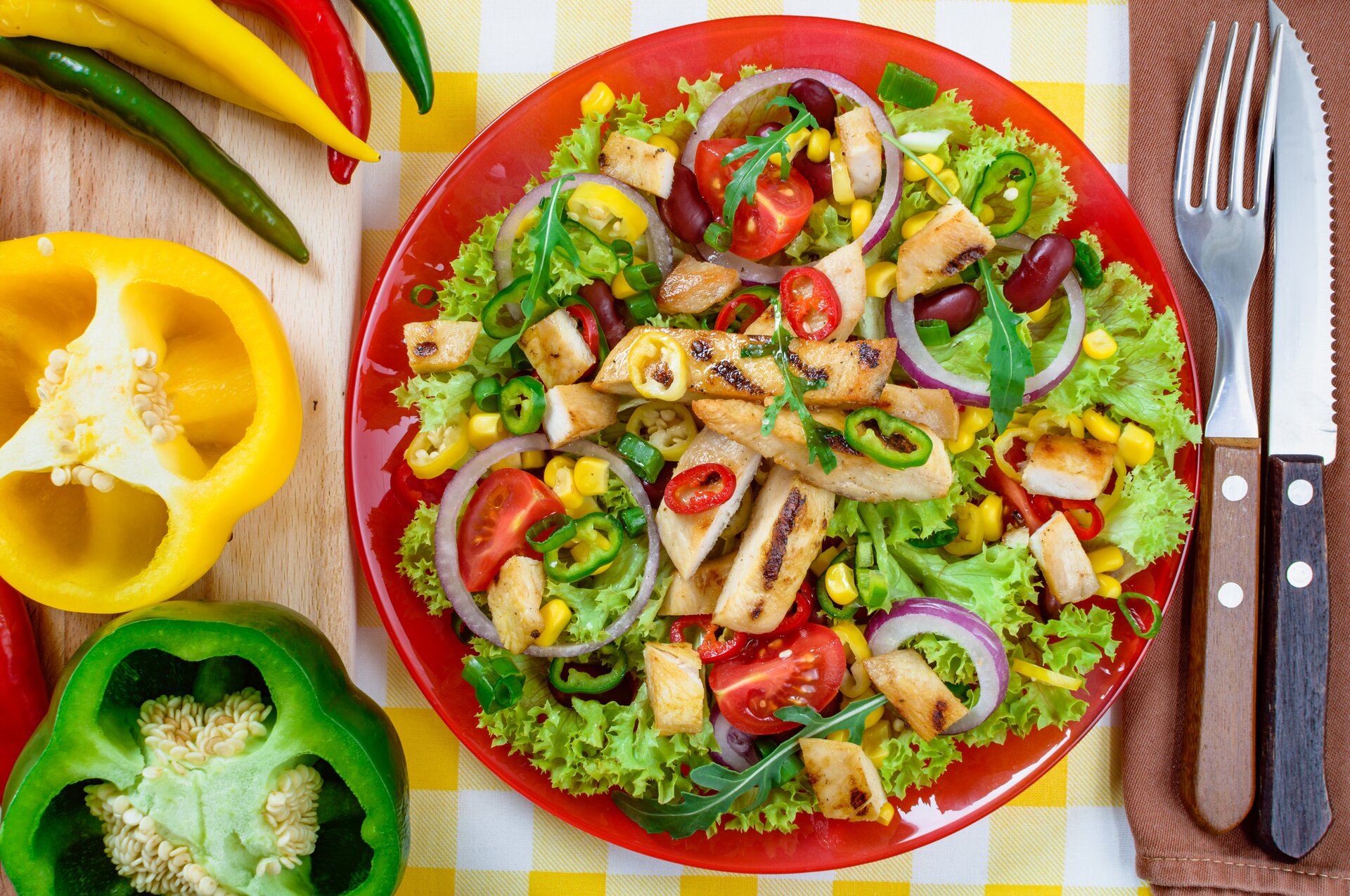
Match the names of vegetables with their translations.
Read the text and do the exercises below.
Is It the Best Diet Ever?(1)
Daily diets varyvary considerablyconsiderably around the world. However, after a close look we might discover that an average dietaverage diet is not sustainablesustainable, in the sense that it uses a lot of nature’s resources, while not giving anything useful back, or worse still – harming the environment, for example by greenhouse gas emissions generated in food production. The world’s food systemworld’s food system needed a new type of diet, which would be good for human health, but also beneficial for the planet, and it looks like we have finally found an accessibleaccessible, science‑based solution: the Planetary Health Diet (PHD) prepared and released by a group of world‑leading scientists from various disciplines.
(2)
Its dietary guidelinesdietary guidelines focus on a variety of plants with modest amountsmodest amounts meat, fish and dairy. Registered dietician and author, Frances Largeman‑Roth, said the PHD is easily represented by a plate, which is half covered by fruit and vegetables, and half covered with a combination of whole grains, plant protein, and a small amount of animal protein. It encourages using an array ofarray of vegetables and fruit in different colours, favours unsaturated fatsunsaturated fats and limits refined grainsrefined grains, highly processed foodsprocessed foods, added sugars, and starchystarchy vegetables such as potatoes. An optimal caloric intakecaloric intake in this diet is 2,500 kcal per day for an average adult, although it may vary depending on age, gender, and activity levels.
(3)
According to 37 scientists, who had studied and researched dietary habitsdietary habits around the world for three years before they formed and developed this approach, the planetary health diet offers numerous benefits. The health ones include improved gut healthgut health, reduced inflammation, and oxidative stressoxidative stress, better memory recallmemory recall, lowered risk of some metabolic diseases like type 2 diabetestype 2 diabetes but also minimised likelihoodlikelihood of heart disease and some types of cancer. The experts stress that it is an omnivorousomnivorous dietdiet, predominantlypredominantly plant‑based, but also including some animal‑source foodanimal‑source food, so it is not as restrictive as other diets, and as it allows flexibility of choice, it will cater forcater for the tastes and needs of everyone. What is more, the commission experts estimateestimate that if they were able to provide the planetary health diet to everyone everywhere, there would be 11 million preventable deathspreventable deaths less per year and food for 10 billion people could be produced within environmental limits.
(4)
From an environmental point of view, there are benefits too. Since the diet is sustainability orientedsustainability oriented, it discourages excessive consumptionexcessive consumption of meat and, as a result, it will generate low carbon emissionslow carbon emissions. It will also leave less waste and low residuelow residue of the products used in it. As the food in this diet doesn’t require as much land, energy and water as meat production does, more land will be left to nature to regulate the climate, produce clean water and reinstatereinstate biodiversitybiodiversity.
(5)
However, it’s not only the positive sides that are publicly debated. The diet has been criticised for using outdatedoutdated research and promoting unrealistically small portions of animal‑source protein, which may lead to dangerous nutritional deficienciesnutritional deficiencies of vitamins B12 and D, retinolretinol, and calcium. Although the commission acknowledged that the vitamin levels should be supplemented or fortified foodsfortified foods ought to be included, there is still some doubt whether PHD is in fact an ideal dietary plan for humanity.
Źródło: Agnieszka Sękiewicz‑Magoń, licencja: CC BY-SA 3.0.
- The text was written to present facts about a new diet. True False
- The text was written for somebody who wants to give up eating meat. True False
- The fourth paragraph continues the main idea of the third paragraph, but focuses on another aspect. True False
- The sentence in the 3rd paragraph: “What is more, the Commission experts estimate that if they were able to provide the Planetary Health diet to everyone everywhere, there would be 11 million preventable deaths less per year and food for 10 billion people could be produced within environmental limits” is an opinion, not a fact. True False
- Omnivorous (in the 3rd paragraph) means “based only on plants”. True False
- The text focuses only on positive aspects of the new diet. True False
- The text does not fully answer the question in its title. True False
Słownik
/ əkˈsesəbəl /
dostępny/dostępna
(easy to approach, enter, use, or understand)
/ ænɪml sɔːs fuːd /
żywność pochodzenia zwierzęcego
(food that comes from animals, e.g. meat, fish, eggs, milk)
/ əˈreɪ ɒv /
szeroki wybór
(a large number or wide range of)
/ ˈævərɪdʒ ˈdaɪət /
przeciętna dieta
(food consumed daily by an average person)
/ ˌbaɪəʊdaɪˈvɜːsəti /
bioróżnorodność
(the diversity of plant and animal life in a particular habitat (or in the world as a whole))
/ kəˈlɔːɪk ˈɪnteɪk /
spożycie kalorii
(the number of calories (energy content) consumed)
/ ˈkeɪtə fɔː /
zaspokajać (np. potrzeby)
(provide all the things that a person needs or wants)
/ ˈsɜːtn/
niektóre
(known but not specified or named)
/ kənˈsɪdərəbli /
znacząco
(to a large, noticeable, or important degree)
/ ˈdaɪət/
dieta
(the food and drink usually eaten or drunk by a person or group)
/ ˈdaɪətəri ˈɡaɪdlaɪnz / / ˈdaɪətəri ˈɡaɪdlaɪn /
rekomendacje dietetyczne
(advice on what to eat and drink to meet nutrient needs, promote health and prevent disease)
/ ˈdaɪətəri ˈhæbɪts / / ˈdaɪətəri ˈhæbɪt /
nawyki dietetyczne
(habitual decisions of individuals or group of people regarding what foods they eat)
/ ˈestɪmeɪt /
szacować
(to guess or calculate the cost, size, value, etc. of something)
/ ɪkˈsesɪv kənˈsʌmpʃən /
nadmierne spożycie
(eating too much of something)
/ˈfɔːtɪfaɪd fuːdz /
wzbogacana żywność
(foods to which vitamins and minerals were added)
/ 'gʌt hɛltheta /
zdrowie jelit
(the physical state and physiological function of the many parts of the gastrointestinal tract)
/ ˌɪnfləˈmeɪʃən /
zapalenie
(a red, painful, and often swollen area in or on a part of your body)
/ ˈlaɪklɪhʊd /
prawdopodobieństwo (the chance that something will happen)
/ ləʊ ˈkɑ:bən ɪˈmɪʃn̩z / / ləʊ ˈkɑ:bən ɪˈmɪʃn̩z /
niska emisja dwutlenku węgla
(release of small amounts of carbon dioxide into the atmosphere)
/ ləʊ ˈrezɪdjuː /
mało pozostałości, niewiele resztek
(small amounts of something left after the main part is no longer present)
/ ˈmeməri rɪˈkɔːl /
przypominanie sobie
(the mental process of retrieval of information from the past)
/ ˈmɒdɪst əˈmaʊnts ɒv / / ˈmɒdɪst əˈmaʊnt ɒv /
skromne ilości
(not large in size or amount)
/ njuːˈtrɪʃn̩əl dɪˈfɪʃnsɪz / / njuːˈtrɪʃn̩əl dɪˈfɪʃnsi /
niedobory składników odżywczych [niedobór składników odżywczych]
(it occurs when the body is not getting enough nutrients such as vitamins and minerals)
/ ɒmˈnɪvərəs /
wszystkożerny/wszystkożerna
(naturally able to eat both plants and meat)
/ aʊtˈdeɪtɪd /
przestarzały/przestarzała, nieaktualny/nieaktualna
(old‑fashioned, no longer current or popular; behind the times)
/ˈɒksɪdeɪtɪv stres /
stres oksydacyjny, zakłócenie równowagi między produkcją wolnych rodników (produkty uboczne przemiany metabolicznej) a zdolnością organizmu do ich usuwania
(the imbalance between the production of free radicals and antioxidant defences)
/ prɪˈdɒmɪnəntli /
w przeważającym stopniu, w głównej mierze, przeważnie
(mostly or mainly)
/ prɪˈventəbl̩ dethetas / / prɪˈventəbl̩ detheta /
zgony, których można uniknąć
(deaths that can be avoided through effective public health and prevention)
/ ˌprəʊsest fuːdz / / ˌprəʊsest fuːd /
jedzenie przetworzone
(any food that has been altered in some way during preparation)
/ rɪˈfaɪnd greɪnz /
rafinowane ziarna, ziarna zbóż pozbawione otrąb i zarodków
(processed grains from which bran and germ have been removed, either through grinding or sifting)
/ ˌriːɪnˈsteɪt/
przywrócić
(give someone back their previous job or position, or to cause something to exist again)
/ ˈrɛtɪnɒl /
retinol, witamina A
(another name for vitamin A)
/ ˈstɑːtʃi /
bogaty/bogata w skrobię
(containing a lot of starch)
/ səˈsteɪnəbəl ˈɔːrɪəntɪd /
zorientowany/zorientowana na zrównoważony rozwój
(concerning the environmental protection and social responsibility of individuals)
/ səˈsteɪnəbəl /
zrównoważone
(using methods that do not harm the environment)
/ taɪp ˌtu: ˌdaɪəˈbiːtɪz /
cukrzyca typu drugiego (an impairment in the way the body regulates and uses sugar as a fuel)
/ ʌnˈsætʃəreɪtɪd fæts / / ʌnˈsætʃəreɪtɪd fæt /
tłuszcze nienasycone
(a type of fat considered to be healthier in the diet than saturated fat)
/ ˈveəri/
różnią się
(differ in size, amount, degree, or nature from something else)
/ wɜːldz fuːd ˈsɪstəm /
światowy system żywienia
(people, institutions, activities, processes and infrastructure involved in producing and consuming food for the world population)