Przeczytaj
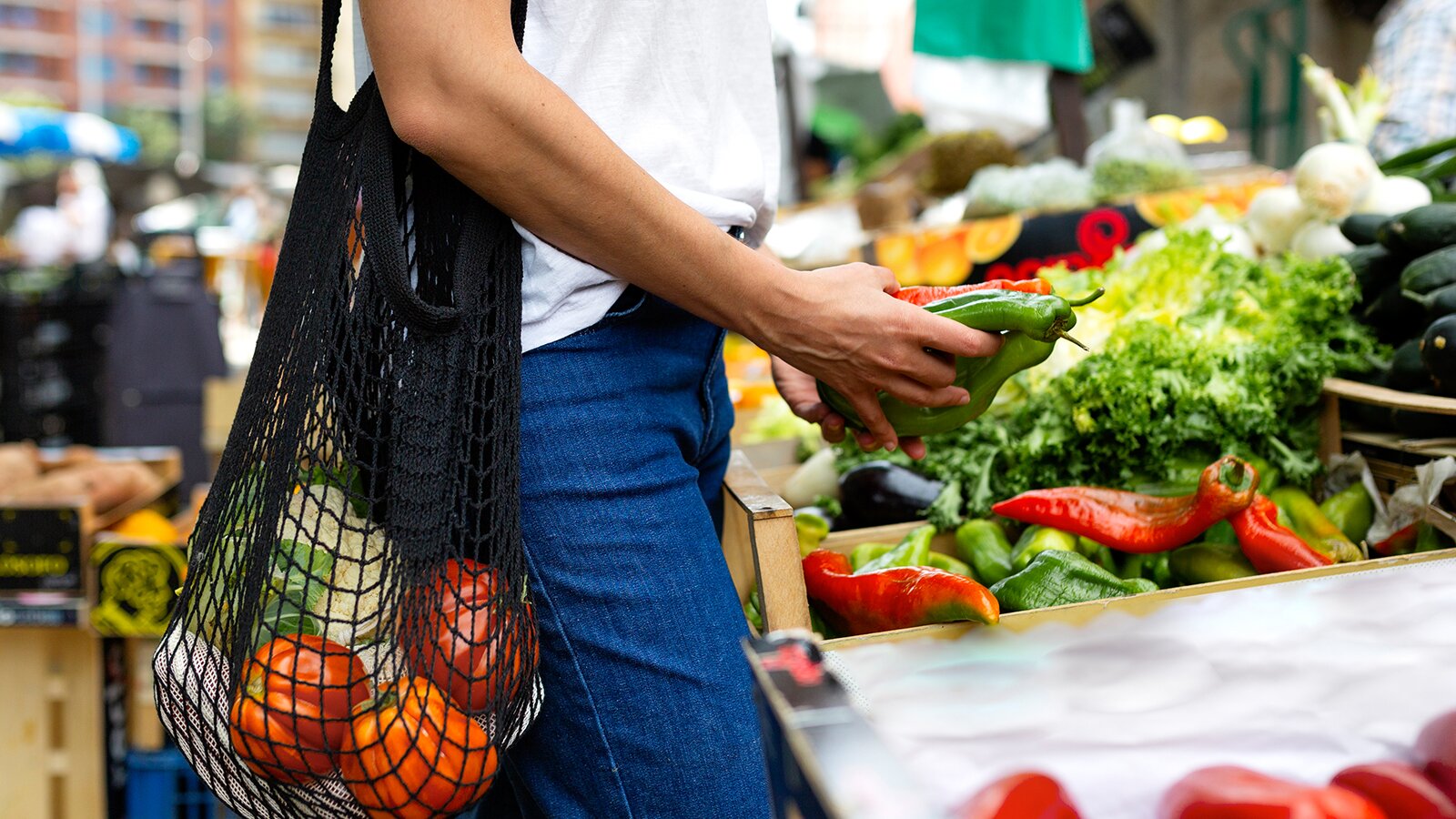
The picture below shows a girl who is doing her grocery shopping at a local market. Does it mean that her diet is sustainable? Read the text to find out.
Na poniższym zdjęciu widać dziewczynę, która robi zakupy spożywcze na lokalnym targu. Czy to oznacza, że jej dieta jest zrównoważona? Przeczytaj tekst i sprawdź.
Read the text to learn more about how what we eat influences the world around us.
The World Is What You EatOur dietary decisions may benefit both people and the environment, enhancingenhancing our personal health as well as that of others and the health of the globe. However, an excessiveexcessive reliance onreliance on a limited type of foods, a lacklack of varietyvariety in our meals, and the ongoingongoing use of products that are not produced sustainablysustainably have a negative effect on the environment.
Due to our dietary habits, practically every nation in the world faces significant food problems, whether it’s obesityobesity or undernutritionundernutrition. Given the choice of food you see in supermarkets, it may be surprising to learn that our diets are too limited across the globe. Historically, more than 6,000 crops have been used to produce food, but only 9% of it, which is fewer than 200 crops, account foraccount for current food production. As a result of this lack of diversitydiversity in our diet, we become less resistant toresistant to pestspests or illnesses in our food supply, which also results inresults in decreased diversity in nature.
There are also negative effects on both human and planetary health from the widespreadwidespread consumption of meat and other animal‑sourced foods by many individuals in developing, developed, and underdeveloped countries. What’s more, meat is largely produced in an unsustainableunsustainable mannermanner. OverfishingOverfishing poses a threat not just to our fish stocks, but also the entire ocean environment. Too many of the crops we consume are produced on recently convertedconverted land and do not follow nature‑friendly production techniques that preservepreserve soil and water quality for future crop growth.
Since local cultures and personal preferences play a significant role in influencing people's diets, they should also be recognised and respected. Healthy, well‑balanced, variedvaried and sustainablesustainable diets will change depending on where you live and the locally and culturally appropriate foods that are available. People who followfollow these diets should try not to rely excessivelyexcessively on any particular commodity. There is no need to completely cut anything out of our diets, even though certain individuals and societies could benefit frombenefit from consuming less of particular foods. We can put more efforteffort into making sure the range of foods we eat is well produced. We can eat the foods we love, but we should try to eliminate products which result in deforestationdeforestation or destruction of wildlife habitat, deteriorationdeterioration of water and soil quality, or unreasonably increased greenhouse gas emissions.
Meals made from plants often have a smaller environmental impact than foods made from animals. As a result, we may lessenlessen our influence on the environment, as a global society, by eating more plant‑based foods, provided that they are readily available, reasonablyreasonably priced, and able to meet each person’s nutritionalnutritional requirements. For many communities, sustainably raised meat and fish are important sources of sustenancesustenance. In other places, they can also be important for managing the landscape and preserving ecosystem services. We should consume the easily accessible food that is good for our health, our livelihoods, and the environment.
Źródło: Dorota Giżyńska, [na podstawie:] https://www.yogurtinnutrition.com/infographic-sustainable-healthy-diets-from-science-to-your-plate/ [dostęp 7.08.2022], https://wwf.panda.org/discover/our_focus/food_practice/sustainable_diets/ [dostęp 7.08.2022], https://www.bda.uk.com/resource/what-is-a-sustainable-diet.html [dostęp 7.08.2022], https://www.buffalo.edu/globalhealthequity/global-projects/foodequity.html [dostęp 7.08.2022], https://www.fao.org/3/ca6640en/ca6640en.pdf [dostęp 7.08.2022], licencja: CC BY-SA 3.0.
Read the text again and choose the correct answer.
2. The way food is produced leads to the deforestation deterioration of water.
3. Our diet should not rely excessively reasonably on any type of food products
4. We should produce food in a more sustainable unsustainable way to protect our planet.
5. In general, we should preserve lessen the impact on the environment by thinking about what food we eat.
Answer the questions. Use 2‑3 sentences.
What was the most surprising information in the text? Why?
What is the relationship between the food we eat and the environment?
Do you think that the food you eat influences the planet in any way? How?
Słownik
/ əˈkaʊnt fɔː /
stanowić (to be a particular amount or part of something)
/ ˈbenɪfɪt frɒm /
czerpać korzyści z (to receive advantages of rewards from sth)
/ kənˈvɜːtɪd / / kənˈvɜːt /
przekształcony/przekształcona [przekształcać] (to change or transform one type of thing into another type of thing)
/ ˌdi:ˌfɒrɪˈsteɪʃn̩ /
wycinka lasów, wylesianie (the clearing of forests for agricultural or commercial purposes)
/ dɪˌtɪərɪəˈreɪʃn̩ /
pogorszenie (the process of becoming worse or less valuable)
/ daɪˈvɜːsɪti /
różnorodność (the state of being varies)
/ ˈefət /
wysiłek (a physical or mental exertion to achieve a goal)
/ ɪnˈhɑːnsɪŋ / / ɪnˈhɑːns /
poprawiając [poprawiać] (to improve the quality or value of something)
/ ɪkˈsesɪv /
nadmierny/nadmierna (going beyond what is necessary or reasonable)
/ ɪkˈsesɪvli /
nadmiernie (in a way that is too much or more than necessary)
/ ˈfɒləʊ /
postępować zgodnie z czymś (to act in accordance with some rules)
/ ɡrəʊtheta /
wzrost (the process of developing of increasing in size or quantity)
/ læk /
brak, niedobór (the absence or insufficient amount of something)
/ ˈlesn̩ /
zmniejszać (to reduce the intensity or quantity)
/ ˈmænə /
sposób (the way in which something is done)
/ njuːˈtrɪʃn̩əl /
odżywczy/odżywcza (relating to food or substances necessary for life)
/ əʊˈbiːsɪti /
otyłość (the condition of being significantly overweight)
/ ˌɒn ˈɡəʊiŋ /
toczący się/tocząca się (in progress or continuing without interruption)
/ ˌəʊvəˈfɪʃɪŋ /
nadmierny połów ryb (significant reduction of fish stock due to excessive fishing)
/ pests / / pest /
szkodniki [szkodnik] (an organism that causes damage to crops)
/ prɪˈzɜːv /
zachowywać (to maintain something in its original state)
/ ˈriːznəbli /
w sposób rozsądny (in a way that is fair, logical, or acceptable)
/ rɪˈlaɪəns ɒn /
poleganie na (trust in someone or something)
/ rɪˈzɪstənt tuː /
odporny/odporna na (able to oppose the effects of something)
/ rɪˈzʌlt ɪn /
prowadzić do (to bring about a particular outcome or consequence)
/ səˈsteɪnəbl̩ /
zrównoważony/zrównoważona (nienaruszający/nienaruszająca równowagi ekologicznej) (able to continue without using up natural resources or causing harm to the environment)
/ səˈsteɪnəbl̩i /
w sposób zrównoważony (in a way that is able to continue without using up natural resources or causing harm to the environment)
/ ˈsʌstɪnəns /
wyżywienie (the food and drink regarded as source of strength and nourishment)
/ ˌʌndə'njuˈtrɪʃn /
niedożywienie (the condition of not receiving adequate food)
/ ˌʌnsəˈsteɪnəbl̩ /
niezrównoważony/niezrównoważona (naruszający/naruszająca równowagę ekologiczną) (not able to be maintained without using up natural resources and causing harm to the natural environment)
/ ˈveərɪd /
różnorodny/różnorodna (having different forms of types; diverse)
/ vəˈraɪəti /
różnorodność (a number or range of different things)
/ ˈwaɪdspred /
powszechny/powszechna (existing or happening over a wide area or among many people)
Źródło: GroMar Sp. z o.o., licencja: CC BY‑SA 3.0