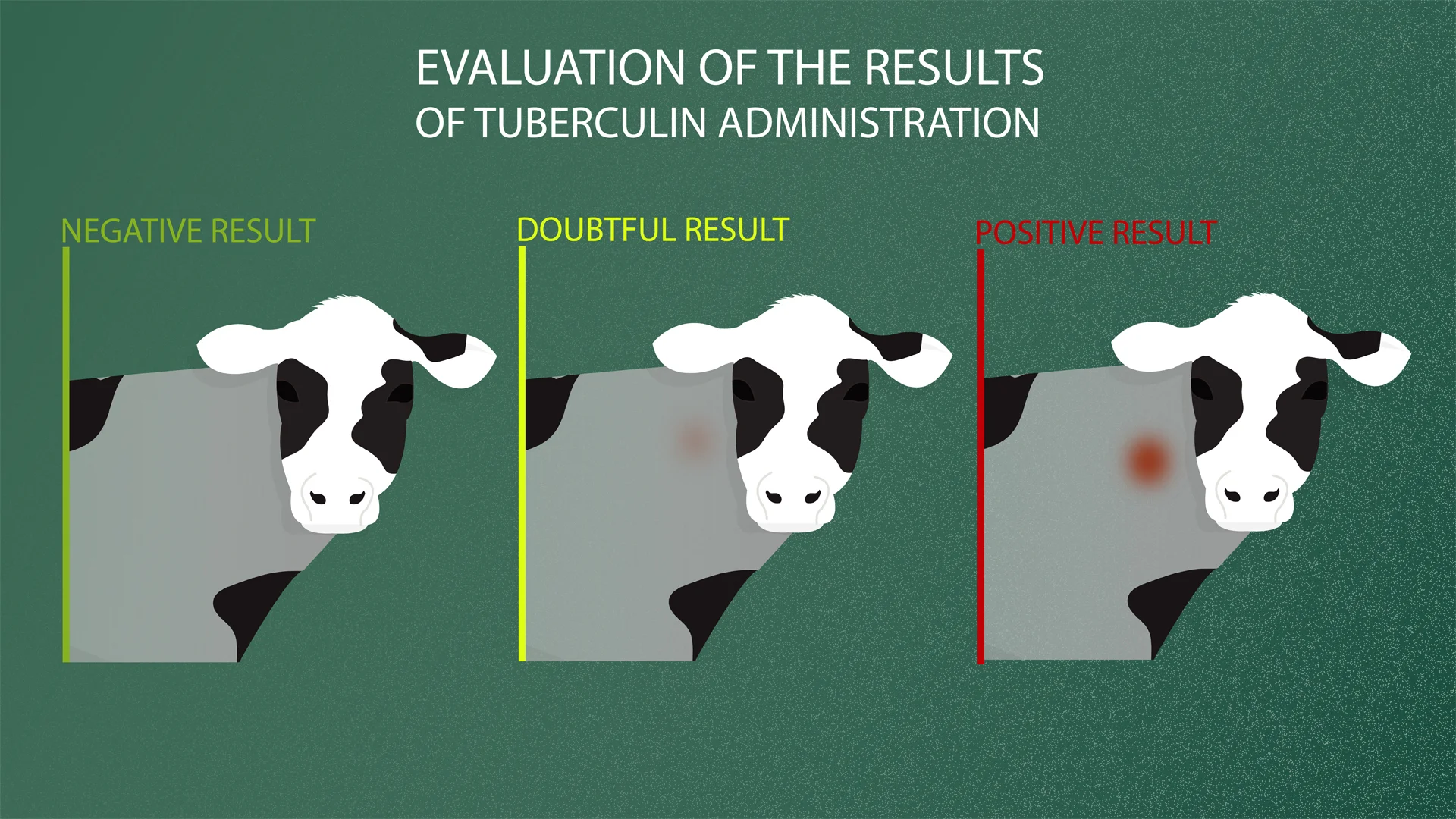
Recommendations of District Veterinary Officer for veterinary technicians regarding the manner of conducting the tuberculinisation of cattlemcf96035d541347e5_1510927907787_0tuberculinisation of cattle. Dear all, As usual, also this year, I would like to remind you the rules of conducting the tuberculinisation of cattle. To control the occurrence of bovine tuberculosismcf96035d541347e5_1510928315869_0bovine tuberculosis, we carry out tests for tuberculosis in 1/5 of cattle herds in the district. In this way, it will take 5 years to examine all the cattle herds within this district. The test involves all animals over 42 days old. Authorised veterinarian carrying out the testmcf96035d541347e5_1510928357622_0test should have: authorisation Veterinary Office identification badge callipersmcf96035d541347e5_1510928373163_0callipers for measuring the thickness of skin foldmcf96035d541347e5_1510928399578_0skin fold with accuracy to 0.1 mm scissors to mark the site of tuberculinmcf96035d541347e5_1510928439159_0tuberculin administration information for identification of results syringesmcf96035d541347e5_1510928460844_0syringes for tuberculinisation and sufficient amount of single‑use needlesmcf96035d541347e5_1510928589910_0single‑use needles rubber boots and disposable protectors for shoes and protective clothes; disinfectant for rubber boots. Tuberculinisation should not be performed in peripartum periodmcf96035d541347e5_1510928612107_0peripartum period. The tuberculin injectionmcf96035d541347e5_1510930199243_0injection site is in the middle of the anterior and posterior 1/3 part of the neck, around 10 cm from the upper edge of the neck. The thickness of skin fold should be measured and wrote down in the examination protocol before tuberculin administration and again at reading the outcomes of the tuberculinisation tests after 72 hours (± 4 hours) from injection. The form also includes the tag number of the examined animal and the reaction result, as well as the amount of tuberculin used in the test. Please observe the above instructions Kind regards District Veterinary Officer
Inspector: Good morning. I represent the District Veterinary Officemcf96035d541347e5_1511165901561_0District Veterinary Office in Kielce, senior inspector Piotr Kowalski. I came to inspect your farm regarding the welfare of animals and conditions of their keepingmcf96035d541347e5_1511165975139_0welfare of animals and conditions of their keeping. F: Good morning, let’s go to the piggery then. I: I would like to start from the place where you keep sick or injured animals, or those undergoing treatmentmcf96035d541347e5_1511166027691_0treatment. F: Here is the isolation roommcf96035d541347e5_1511166049510_0isolation room, cupboards for medicinesmcf96035d541347e5_1511166182382_0medicines and disinfectants. I: Good, now let’s go to the facility where you keep the pre‑farrowingmcf96035d541347e5_1511166767030_0pre‑farrowing sows. I would like to check the cleanness, the amount of material for the nest, the area of farrowing pensmcf96035d541347e5_1511167048661_0farrowing pens and how the gilts are handled before the deliverymcf96035d541347e5_1511186212528_0delivery. F: I remove the manure on a daily basis, I installed a separator in the farrowing pen to prevent the sow from crushing the piglets, the gilts are treated for internal and external parasitesmcf96035d541347e5_1511186227494_0internal and external parasites 2 weeks before farrowing. Please come with me. I: Very good. Can you tell me, please, how you handle the piglets after weaningmcf96035d541347e5_1511186264028_0weaning? F: I weaned the piglets 6 weeks after their birth, I relocate them to the rearing facilitymcf96035d541347e5_1511186285492_0rearing facility. I: Tell me how you give water to the pigs? F: All pigs older than 2 weeks have permanent access to water through the drinking units, the water comes from the pipeline, I also have my own well in case of emergency. I: And what about the feed? F: Last year I invested in feed distributormcf96035d541347e5_1511186313158_0feed distributor which gives the feed from the tanks directly to the sows’ feeder. It is also connected with mill distributormcf96035d541347e5_1511186360761_0mill distributor, so the system is fully automated. Piglets receive complete feedmcf96035d541347e5_1511186392764_0complete feed. I: Good. I have no objections as to the conditions of animal breeding. I have to inspect administrative decisionsmcf96035d541347e5_1511186433358_0administrative decisions about the infectious diseasemcf96035d541347e5_1511186455104_0infectious disease-free status, record book of the pigs, records of animals’ treatment and documentation regarding the feeding of the animals. I will also prepare protocol of the whole inspection. F: Let’s go to the office then.
System of identification and registering of animals (IRA)
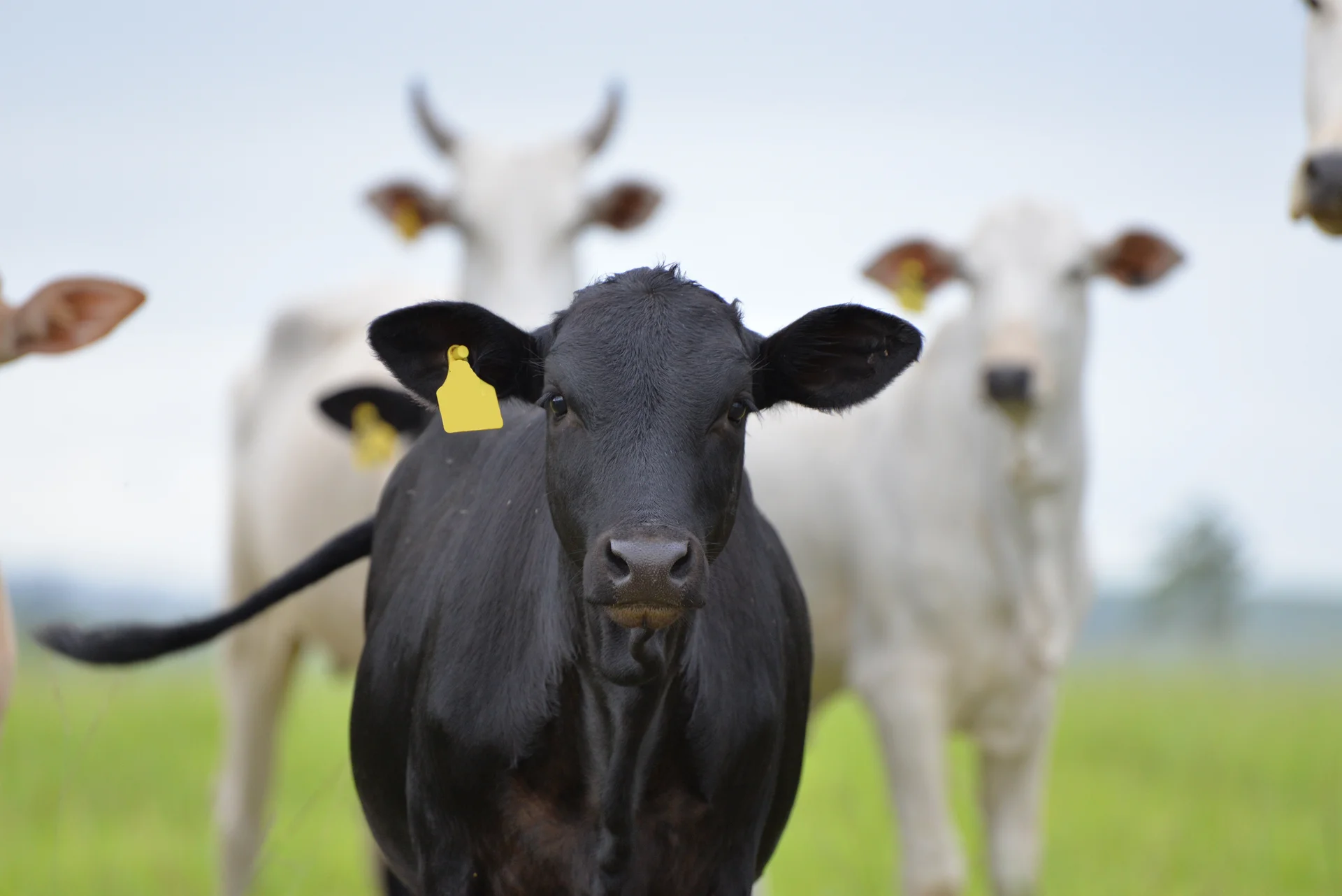
T1: Do you remember? Tomorrow we are doing the training for the farmers in Buczek village. Maybe we should plan the agenda? T2: We must make the farmers aware that observing the requirements of the system of identification and registration of animalsmcf96035d541347e5_1511186930103_0system of identification and registration of animals (IRA) is one of the basic farmer’s duties. This system allows for tracking the movement of animals and their offspring between the farms and this ensures the improvement of food safety and animal health, and consequently – improvement of public health. T1: Yes, you’re right. That’s why the farmers must know how to register animals in IRA, they must ask the Agency for Restructuring and Modernisation of Agriculture for the number of the herd’s seatmcf96035d541347e5_1511187091508_0the herd’s seat. T2: Let’s emphasise that each owner of the cattle, pigs, sheep and goats has to keep record book and update it regularly, adding within 7 days information about animals which came to the herd or left it. Maybe it’s good to show them such books and forms. T1: I know from my experience, that they are confused about this system of animal tagging. T2: Look, I prepared a leaflet – I will read it to you: You should tag your cattle by fitting a cattle tagmcf96035d541347e5_1511187275424_0cattle tag with the identification number in each ear of the animal within 7 days after its birth. Sheep and goats are to be tagged within 10 days after birth. Pigs are tagged by: 1) place the tag in the animal’s left ear within 30 days after its birth, the tag should have identification number of the farm in which it was born 2) making a tattoomcf96035d541347e5_1511187539623_0tattoo with the number of the farm in which it was fattened the latest on the sale date of the animal T1: It seems comprehensible. We must also remind them about the passport of the cattlemcf96035d541347e5_1511187554355_0passport of the cattle which is issued by the Agency for Restructuring and Modernisation of Agriculture at reporting the animal’s birthmcf96035d541347e5_1511187654493_0reporting the animal’s birth. After all, it is the most important identification documentmcf96035d541347e5_1511187684776_0identification document of a given animal. T2: Ok, I think these are the most essential issues to be mentioned. I’m sure the farmers will have lots of questions, as usual. T1: I hope we will be able to answer them!