Tradition and the future, old and new – not only in the distorting mirror
you will to tell about the past and the present weddingwedding customscustoms
you will identify in the text the examples of situational and linguistic comedylinguistic comedy, and the character‑based humour.
you will explain what grotesquegrotesque is and how to find its elements in the text
you will explain what the stylization of dialectstylization of dialect is and what are its functions
Before the lesson
Ask your grandparents or parents about wedding customs.
In your notebook list the examples that are the most interesting.
On the basis of these conversations and other sources, try to determine which of these customs have remained to this day, and which have become a thing of the past.
Discuss what may be the reason for those changes.
Old and new
TraditionTradition is our connection with the past. It recalls the patterns, standards and models. However, in today’s world that changes so fast, it is difficult to remain attached to the past. The 20th‑century literature has repetitively raised the problem of the tradition and the progress rivalry. Sławomir Mrożek, whose text you will read today, presented these phenomena in the distorting mirror.
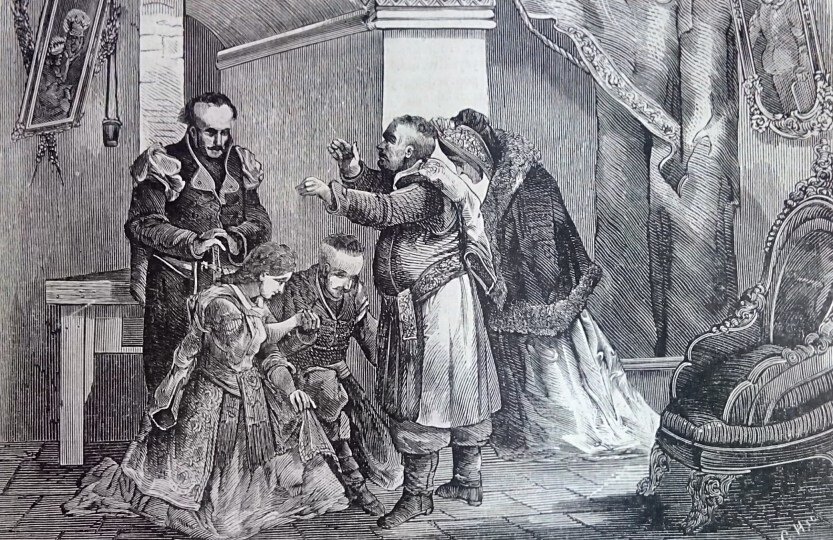
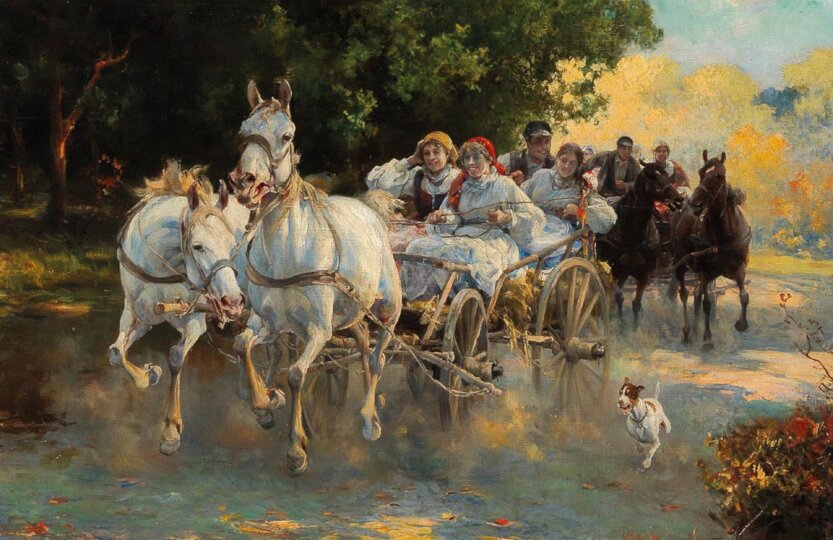
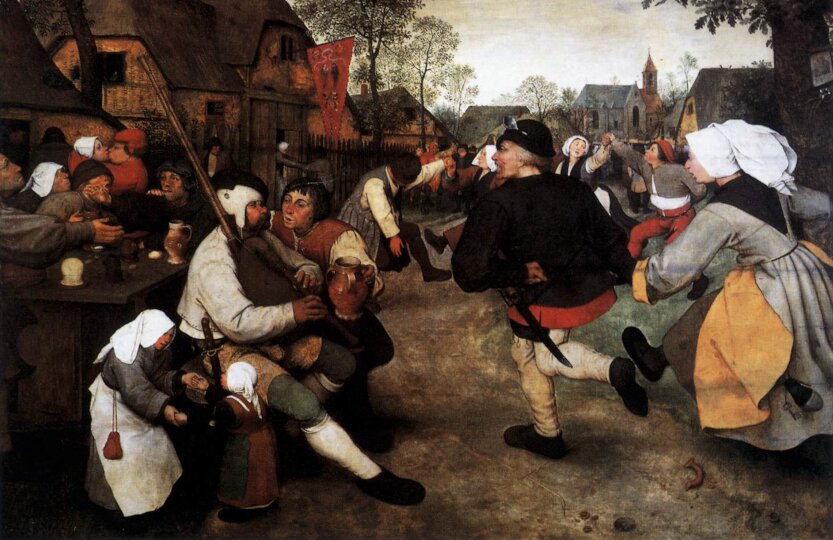
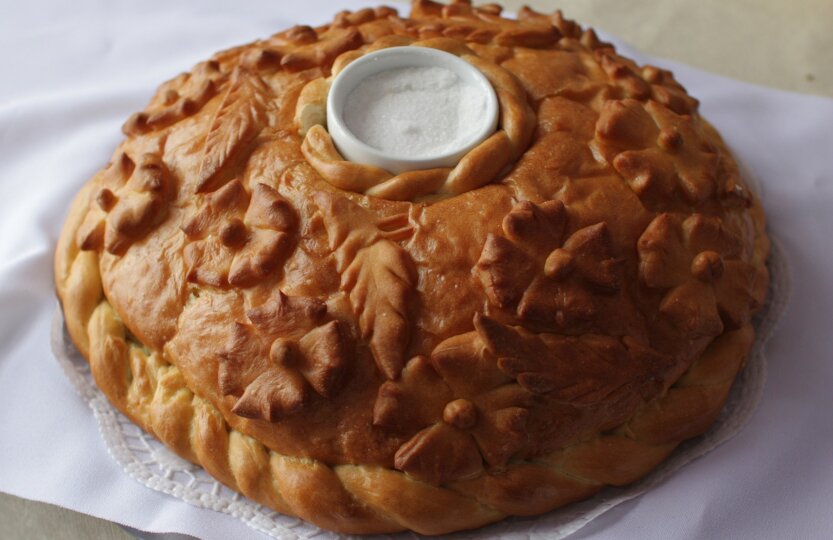
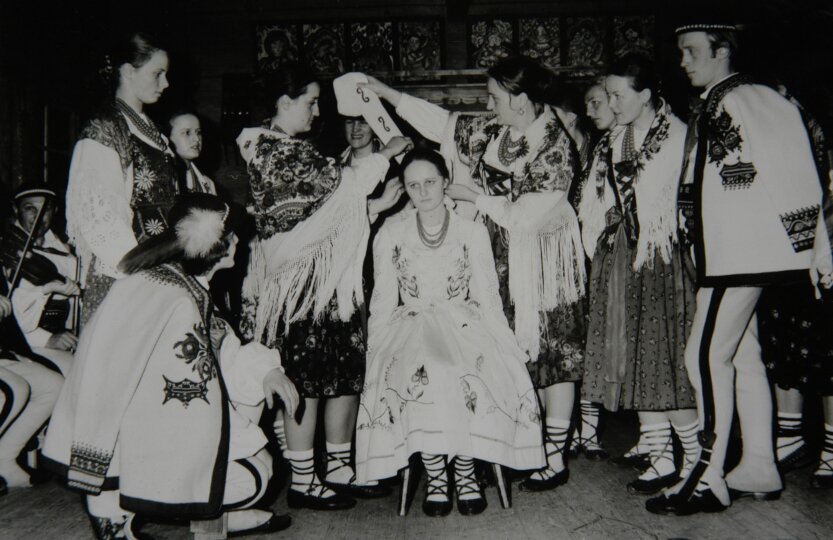
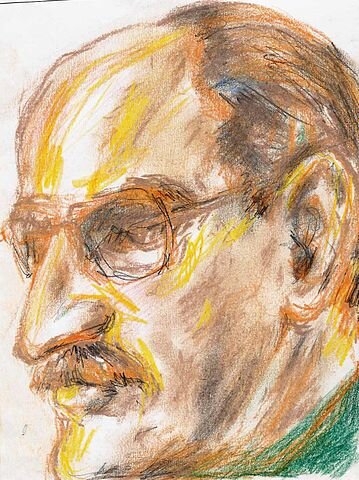
Sławomir Mrożek (1930‑2013), the world famous Polish dramatist, writer, illustrator and essayist. He made his debut as an illustrator and prose writer in the first half of the 1950s, and his first drama (Policja) was published in 1958. Sławomir Mrożek spent most of his life in an exile outside Poland: in the USA, Italy, France, Germany and Mexico. His dramas are characterized by grotesque and absurd, addressing socio‑philosophical issues. The most famous dramas by Mrożek are: Tango (1964), Emigranci (1974), Miłość na Krymie (1993).
Read the fragment of “Wedding in Atomville” (“Wesele w Atomicach”) by Sławomir Mrożek. What is your opinion on this text?
Wesele w AtomicachHej, wysoko ci u nas technika stanęła, wysoko...
Pan młody miał pod lasem niezły kawał laboratorium i coś ze dwa reaktory wedle cesarskiego gościńca, zaś w samym obejściu nieduży, ale schludny zakład chemicznej syntezy. Pannie młodej ojciec dawał w posagu całą siłownię, w dobrym punkcie, w samym środku wsi, przy kościele. A do tego miała w malowanym kufrze chyba ze sześć patentów z dziedziny biochemii. Nic dziwnego, że młodzi byli dobrani i rodzice obojga wnet się na małżeństwo zgodzili. I ogłoszono w Atomicach wesele.
Akuratżem walcował blachę na zimno, jak brat panny młodej przyszedł na wesele mnie zapraszać. Był ci to postawny uczony, kolega mój jeszcze z katedrykatedry. Boga pochwalił, bose nogi na słomiance wytarł i na zydluzydlu przysiadł.
Trochę trudno nam było rozmawiać, bo tego roku odrzutowce szczególnie jakoś licznie się zleciały i pola startowe za stodołą sobie uwiły, coraz też któryś w powietrze wzlatywał i głośnym świegotem swoim słowa nasze tłumił.
– Ano, wydajemy ją za mąż! – westchnął gość. – Ino żeby awantury jakiej na weselu nie było – dodał strapiony.
– Coby miała być – odpowiedziałem. – Przecie to jest wesele pokoju, no nie?
Posiedzieliśmy jeszcze z kwadrans, popatrzyli, jak dzieci wracają drogą z uniwersytetu, jak stary Józwa zwozi do stodoły paliwo, a potem pożegnał się i poszedł.
Nadszedł dzień wesela. Trochę nieporęcznie wypadło, bo akurat w tym czasie zaczęli u nas przekształcać przyrodę.
To, co było zalesione, ucywilizowano, ale za to zmelioryzowanozmelioryzowano, zaś pustynie zalesiono. Rzekę zawrócono, żeby płynęła w drugą stronę. W związku z tym droga do kościoła wypadła nieco dalej, zaś u mnie na podwórku powstała wielka tama o poważnym znaczeniu gospodarczym, tak że drzwi się całkiem nie odmykały i z trudnością można było wyjść z domu.
Kiedym na miejsce przyszedł, akurat zaczynały się oczepiny. Druhny śpiewały:
Jak cię będą czepić,
spojrzyj do powały,
żeby twoje dzieci
czarne oczka miały.Potem zrobiły jej elektrolizę i wyprowadziły do komory ciśnień.
Tymczasem gości przybywało. Wszyscy byli w ludowych termostatachtermostatach nałożonych na granatowe garnitury kort‑tenis. Niektórym już się kurzyło ze skafandrów. Na podwórku podchmieleni piloci trzaskali z rur wydechowych. Psy szczekały.
Ale dopiero po kościele zaczęła się prawdziwa zabawa.
Stałem na przyzbie, żeby przedwieczornym powietrzem odetchnąć. Z izby dochodziły różne dźwięki muzyki dodekafonicznejmuzyki dodekafonicznej, to znów syntetycznejsyntetycznej. Coraz to buchały przyśpiewki a przytupywania. Kłębiły się, wrzały jurne siły wytwórcze. Na niebie pojawiła się gwiazda. Dzieci rzucały w nią kamieniami.
Wesele trwało w pełni, gdy jakoś przed jedenastą wyskoczył na środek młody Smyga zza rzeki, tancerz zawołany, pieśniarz i filut. Okręcił się parę razy, stanął przed orkiestrą i zaśpiewał na poczekaniu:
Już się przed wsią naszą
jasna przyszłość mości,
przez szczęście społeczeństwa
do szczęścia ludzkości!
Oj, dana, oj, dana!Bardzo się to wszystkim spodobało. Powstał śmiech i głośne brawa. Ale już młody Pieg odbił się, wyciął hołubcahołubca, czapkę na bok skręcił i zaśpiewał w odpowiedzi:
Najpierw trzeba zacząć
od spraw moralności:
do szczęścia społeczeństw
przez ducha czystości!
Hop, dziś!Na to znowu śmiech i brawa. Poniektórzy zaczęli krzyczeć na Smygę, żeby Piegowi się odciął. Ale ten nic nie rzekł, jeno cichaczem Piega zaszedł i niespodziewanie wypalił go głowicą atomową, co ją miał schowaną za pazuchą. Pieg zatoczył się i zaczął promieniować, ale zdążył jeszcze guzik u surduta nacisnąć i z wyrzutni, co ją miał ukrytą w prawej nogawce, rakietę średniego zasięgu prosto w czoło tamtemu puścił. Byłby niewątpliwie Smygę wykończył, gdyby nie to, że mu ostatni człon rakiety nie odpalił i przez to nastąpiła dewiacjadewiacja z kursu. Cofnął się Smyga, zakołysał i oparł o barierę cieplną, ale ta pękła i Smyga poleciał w głąb temperatury, przy stale wzrastającym jej współczynniku.
– Ludzie, co robita?! – zawołał ojciec panny młodej, wskazując na staroświecki, ścienny licznik Geigeralicznik Geigera.
Ale już gwałt się podniósł i rwetes, i na środku izby zaczęły szybko wyrastać ogromne niebieskie paprocie – zwyczajna rzecz przy wzmożonej radioaktywności w zamkniętym pomieszczeniu. Już i inne rakiety latać zaczęły, jeden tylko Bańbuła zachował przyzwoitość i konwencjonalnie rżnął nożem. Wtem gwizd ostry się rozległ. To gospodarz, widząc, że inaczej gości nie uspokoi, skoczył do domowego rezerwuaru, odkręcił kurek i gazy bojowe na izbę puszczając, rozpoczął zakażanie. Rzucili się wszyscy do kombinezonów, ale mój okazał się nieszczelny, ponadto śpiący już trochę byłem, więc postanowiłem zaniechać zabawy i pomału do domu się zbierać.
Noc była jasna, bo od zagrody, gdzie odbywało się wesele – takie promieniowanie biło, że bez trudu drogę znajdywałem. Szło się rześko, bo deszczyk radioaktywny też skropił raz i drugi. Trochę mi tylko to przeszkadzało, że czułem ssanie w organizmie, no, ale po zabawie – to rzecz zwyczajna – no i to, że zaczęły mi wyrastać dodatkowe nóżki, po trzy pary z każdej strony, zielony róg na czole, a na grzbiecie chitynowy pancerzyk. Jakoś jednak dobrnąłem do chałupy, przelazłem przez szparę w ramie okiennej i znalazłszy sobie zaciszne miejsce na listwie za szafą, z dala od pająków – zasnąłem spokojnie, rozpamiętując, jak to było na tym hucznym weselisku.
Source: Sławomir Mrożek, Wesele w Atomicach, [w:] tegoż, Wybór dramatów i opowiadań,, Kraków 1978, s. 275–278.
Use the information from the text and decide if the following statements are true of false.
- The story is realistic.
- This story is the example of the non-fiction literature.
- This is the science-fiction story.
- This story is dominated by the third-person narrative.
- This story is dominated by the first-person narrative.
- The form that dominates in this story is a dialogue.
- The style of the texts does not have the features of stylisation.
- The style of the text is modelled on the folk speech.
- The style of the text is modelled on the youth dialect.
- The folk dialect stylization has been disturbed only in the final of the story.
- The folk dialect stylisation is consistent and has not been disturbed in any way.
- The narration includes words that contrast with the language stylised on the folk dialect.
Use the information from the text and decide if the following statements are true of false.
The text contains fragments that are folk songs stylised., The effect of comedy was not intended by the author, but it results from the fact, that the the story was written in the distant past and is read by the contemporary reader., The text contains quotes from the contemporary poetry., The fragments in the verse are of a lyrical character., The effect of comedy in the story was achieve through the creation of the characters only., The story consist of the situational comedy only., The main character is an insect from the beginning of the story., The plot is humorous due to the contrast between the traditional folk wedding elements and the technological elements of modernity., The story is serious., The story is humorous., The main character stays in the human form till the end of the story., At the end of the story the main character undergoes physical transformation.
| True | |
|---|---|
| False |
Assign the given elements to the right group. Separate the examples of tradition from the examples of modernity.
Wedding folk songs, Electrolysing the Bride, A wall Geiger counter, Painted trunk., Holubce, Praising the God as the greeting, Dodecaphonic music, An agreement of the couple’s parents regarding the marriage., Folk thermostats, Patents in the field of biochemistry, Bridesmaids, Dowry
| Tradition | |
|---|---|
| Modernity |
Mode of expression changing the literary text language, so it becomes characteristic for a specific era, author, environment or a certain community. It consists in introducing to the style of expression recognizable features that are typical of the imitated style. The mode of expression reflecting the local dialect is called stylisation of dialect.
In the text by Sławomir Mrożek find the elements proving that the narration is stylised after the local dialect.
Work in groups and find in the text the examples of comedy that is:
| situational | linguistic | of characters |
|---|---|---|
Which type of comedy appears the most often?
Complete the definition with the right words.
represented, contrasts, tragedy, diminishing, comism, poetic, stanzas, exaggeration, drama
Grotesque is a special kind of ........................ consisting in ........................ of the selected features of the world ........................ and juxtaposing .........................
Use the Internet and find the cartoons by Sławomir Mrożek. Then draw a grotesque illustration to the story Wedding in Atomville em>
Read the information about the wedding customs that were practised on the Mazovian villages in the past. Find the website of the University of Warsaw dedicated to dialectology and look for the information on the wedding customs of those regions that are of interest to you.
Keywords
tradition, modernity, stylization of dialect, grotesque, comedy
Glossary
tradycja
nowoczesność
stylizacja gwarowa
komizm językowy
komizm postaci
komizm sytuacyjny
groteska
kontrast
wesele
zwyczaje
obrzędy
Nagranie dostępne na portalu epodreczniki.pl
Nagranie dźwiękowe słówka: unveilling and capping ceremony.
oczepiny
błogosławieństwo
przyśpiewki
zaręczyny
swat
posag
wianek